Japan Festival Calendar Database: 515 Dated Events Across 45 Prefectures (Open Data, as of Aug 2026)
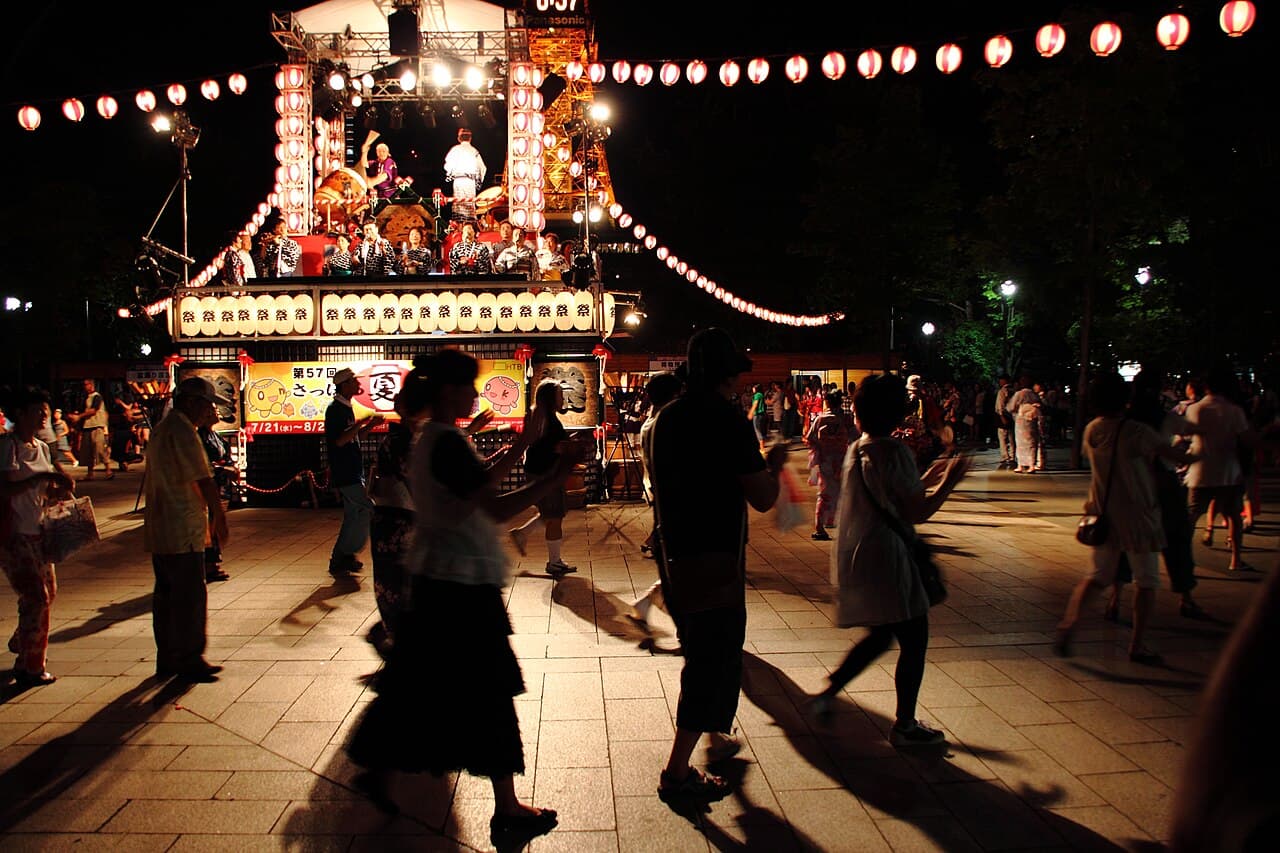
Japan's festival year is not evenly spread: 28.7% of the 129 traditional matsuri in this database fall in August alone, and 44.2% in June–August. This page is the open, machine-readable snapshot of the Japan-Event calendar database — 515 dated event editions across 45 of Japan's 47 prefectures, as of August 7, 2026. Every figure below was extracted mechanically from our own database on that date. Nothing here is an estimate, and the raw rows are downloadable at the foot of the page.
What is in the dataset
| Measure | Value (as of Aug 7, 2026) |
|---|---|
| Dated event editions | 515 |
| With a machine-readable start timestamp | 515 (100%) |
| With an end timestamp as well | 439 (85.2%) |
| Starting on or after the snapshot date | 233 (45.2%) |
| Prefectures represented | 45 of 47 |
| Distinct organisers named | 343 |
| With venue coordinates (lat/lng) | 496 (96.3%) |
| Calendar years covered | 2026 (448), 2027 (66), 2028 (1) |
When Japan's traditional matsuri happen
The 129 entries classified as traditional festivals are the clearest seasonal signal in the set.
| Month | Matsuri | Share |
|---|---|---|
| January | 4 | 3.1% |
| February | 9 | 7.0% |
| March | 1 | 0.8% |
| April | 5 | 3.9% |
| May | 14 | 10.9% |
| June | 6 | 4.7% |
| July | 14 | 10.9% |
| August | 37 | 28.7% |
| September | 8 | 6.2% |
| October | 18 | 14.0% |
| November | 7 | 5.4% |
| December | 6 | 4.7% |
Two peaks, not one: August (37) is the clear summit and October (18) a distinct autumn second peak. March is the thinnest matsuri month in the set, with a single entry — the cherry-blossom window that dominates foreign perception of the Japanese calendar carries very few festivals as this dataset classifies them. March, April and May together hold 20 matsuri (15.5%), barely more than half of August alone. (Shares are rounded to one decimal and sum to 100.3%.)
All curated editions by month
| Month | Editions | Share |
|---|---|---|
| January | 11 | 2.5% |
| February | 20 | 4.5% |
| March | 14 | 3.2% |
| April | 13 | 2.9% |
| May | 21 | 4.8% |
| June | 57 | 12.9% |
| July | 110 | 24.9% |
| August | 77 | 17.4% |
| September | 31 | 7.0% |
| October | 42 | 9.5% |
| November | 29 | 6.6% |
| December | 17 | 3.8% |
n = 442. June–August accounts for 244 editions (55.2%).
This table deliberately excludes 73 rows collected from event platforms (connpass 33, Luma 20, Meetup 10, jmty 9, Peatix 1). Those platforms only publish near-term listings, and in this snapshot all 73 of them fall in June (37) or July (36) and none in any other month — including them would have inflated early summer by an artefact of when we crawled. The 442 rows above are the editorially curated entries (source_platform = original).
Where they are
| Prefecture | Editions |
|---|---|
| Tokyo | 166 |
| Kyoto | 43 |
| Osaka | 38 |
| Hokkaido | 24 |
| Fukuoka | 24 |
| Aichi | 23 |
| Kanagawa | 19 |
| Chiba | 17 |
| Okinawa | 14 |
| Ishikawa | 13 |
| Nara | 13 |
| Hiroshima | 11 |
| Hyogo | 8 |
| Akita | 7 |
| Aomori, Gifu, Niigata, Shizuoka | 6 each |
The top ten prefectures hold 381 of the 505 resolvable rows (75.4%), and Tokyo alone holds 32.9%. The full 45-prefecture breakdown is in the CSV and the summary JSON. Ten rows (1.9%) carry no address a prefecture can be parsed from and are excluded from this table; they are listed by slug in the summary JSON.
By category
| Category | Editions |
|---|---|
| festivals | 129 |
| seasonal | 66 |
| nightlife | 58 |
| arts-culture | 46 |
| tech | 45 |
| food-drink | 38 |
| outdoor | 31 |
| international | 27 |
| expo | 20 |
| sports | 19 |
| anime-pop | 16 |
| experiences | 16 |
| club | 4 |
How long they run
| Duration | Editions | Share |
|---|---|---|
| 1 day | 180 | 41.0% |
| 2–3 days | 148 | 33.7% |
| 4–7 days | 33 | 7.5% |
| 8 days or more | 78 | 17.8% |
Median duration is 2 days (n = 439; a further 76 rows record a start but no end).
Admission
- Free: 269 (52.2%) — the row's ticket data is flagged free, or its price line reads "Free" with no amount.
- Paid: 197 (38.3%) — the price line names an amount, a currency or a ticket.
- Mixed or unclear: 49 (9.5%) — typically an event that is free to watch inside a paid site, e.g. a free procession past a castle keep that charges its own admission.
The underlying boolean under-reports free entry on its own: 52 rows whose ticket flag is not "free" describe free admission in their price text. That is why the classification above reads the price line as well, and why a third bucket exists instead of forcing every row into free or paid.
Photo provenance
Every cover image in the dataset carries a recorded author and a source URL — 515 of 515 (100%).
| Provenance | Images |
|---|---|
| Creative Commons, CC0, public domain or no known restrictions | 458 (88.9%) |
| Platform cover, linked back to the listing (connpass 24 / Luma 20 / jmty 8) | 52 (10.1%) |
| Supplied by the organiser with permission | 5 (1.0%) |
Busiest single dates for matsuri
| Date | Matsuri |
|---|---|
| August 1 | 6 |
| August 2 | 5 |
| May 3 | 5 |
| July 25 | 4 |
| August 16 | 4 |
| August 29 | 4 |
What this dataset does not contain
Stating the gaps is part of publishing the data honestly. As of this snapshot:
- No confirmed-versus-provisional flag. Every row has a start timestamp, but the database does not record whether that date is confirmed by the organiser or carried forward from the usual annual slot. 508 of 515 (98.6%) carry a specific clock time rather than a midnight placeholder, and 7 rows (1.4%) carry an explicit TBA/TBC marker in their copy — but neither is the same as a certainty flag. Adding one is the first item on the roadmap for the next refresh.
- No ticket on-sale date. The schema stores a ticket URL (present on 10 rows) and a price string (13 rows), but no on-sale date — so no median lead time from tickets going on sale to the event can be computed from this data, and we have not estimated one.
- No indoor/outdoor attribute.
outdooris one of the 13 category values, not a property of the venue, so it cannot be used to count indoor versus outdoor events. - Ten rows without a parseable prefecture, listed by slug in the summary JSON.
Methodology
Population. Every published type=event page on japan-event.info, taken from the English row so one edition is counted once (each edition also exists as a Japanese page; those are the same events, not extra ones). Pulled from the public API on August 7, 2026.
Month counts use the start timestamp in Asia/Tokyo. Traditional matsuri are rows whose category is festivals; the two historical spellings in the data (festival, festivals) were merged, which is the only normalisation applied to the category field. Curated editions are rows whose source_platform is original; the 73 platform-collected rows are reported separately above rather than dropped silently. Prefecture is the rightmost Japanese prefecture name appearing in the venue address (480 rows); where the address names no prefecture but the row is tagged with a city that maps to exactly one prefecture, that mapping is used (25 rows); the remaining 10 rows are excluded and named. Duration counts calendar days inclusive, so a same-day event is 1. Percentages are rounded to one decimal place and may not sum to exactly 100.
What is excluded. Draft and archived rows, and events whose only source is a single unverified mention — see our editorial policy for the two-source standard we hold dates and prices to.
Get the data
- CSV, all 515 rows, 23 columns (slug, both titles, start/end, duration, prefecture and how it was resolved, city, venue, coordinates, category, admission, price text, organiser, source platform, official URL, page URL, image licence/author/source): japan-festival-calendar-2026.csv
- Summary JSON — every aggregate on this page, machine-readable, including the exclusion lists: japan-festival-calendar-2026-summary.json
- Live feed — the same underlying rows, always current, no snapshot lag: /api/sites/event/articles/?type=event&lang=en&page_size=1000
Reuse is free, including commercially, with attribution.
How to cite this data
Japan-Event Festival Calendar Database, Japan-Event (japan-event.info), data as of August 7, 2026. https://japan-event.info/en/articles/data-japan-festival-calendar-2026
The snapshot files are dated and frozen; the live feed is not. If you quote a figure, quote it with the as-of date above rather than as a standing fact — the counts move every week.
Update schedule
This page is refreshed quarterly at the same URL, so a link to it never goes stale and never breaks. Snapshot 1: July 16, 2026 (295 upcoming editions). Snapshot 2: August 7, 2026 — this one (515 dated editions, first release with prefecture, category, duration, admission and image-provenance breakdowns). Snapshot 3 is due November 2026 and will add a confirmed-versus-provisional flag if the schema work lands first.
For the human version of what these numbers describe — what a matsuri actually is and how to attend one — see how to attend a Japanese festival, and for what is on right now, Japan events in August 2026.
常见问题
- How many festivals and events does Japan-Event track?
- 515 dated event editions as of August 7, 2026, spanning 45 of Japan's 47 prefectures and the calendar years 2026-2028. 233 of them start on or after that date.
- Which month has the most Japanese festivals?
- August. Of the 129 traditional matsuri in the database, 37 (28.7%) start in August, and October is a distinct second peak with 18 (14.0%). March is the thinnest matsuri month with a single entry.
- Are Japanese festivals free to attend?
- Mostly. Of 515 editions, 269 (52.2%) are free, 197 (38.3%) are paid, and 49 (9.5%) are mixed or unclear - typically a free procession inside a site that charges its own admission.
- Can I download the festival data?
- Yes. A CSV of all 515 rows with 23 columns, a summary JSON of every aggregate on this page, and a live API feed are all published on this page. Reuse is free, including commercially, with attribution to Japan-Event.
- Does the dataset say whether a festival date is confirmed?
- No. Every row carries a start timestamp, but the database records no confirmed-versus-provisional flag, and no ticket on-sale date. Both gaps are stated on the page rather than estimated; adding a confirmation flag is the first item for the November 2026 refresh.