Why Gion Matsuri Exists: Its 869 Origin, Explained (Gozu Tenno & Warding Off Plague)
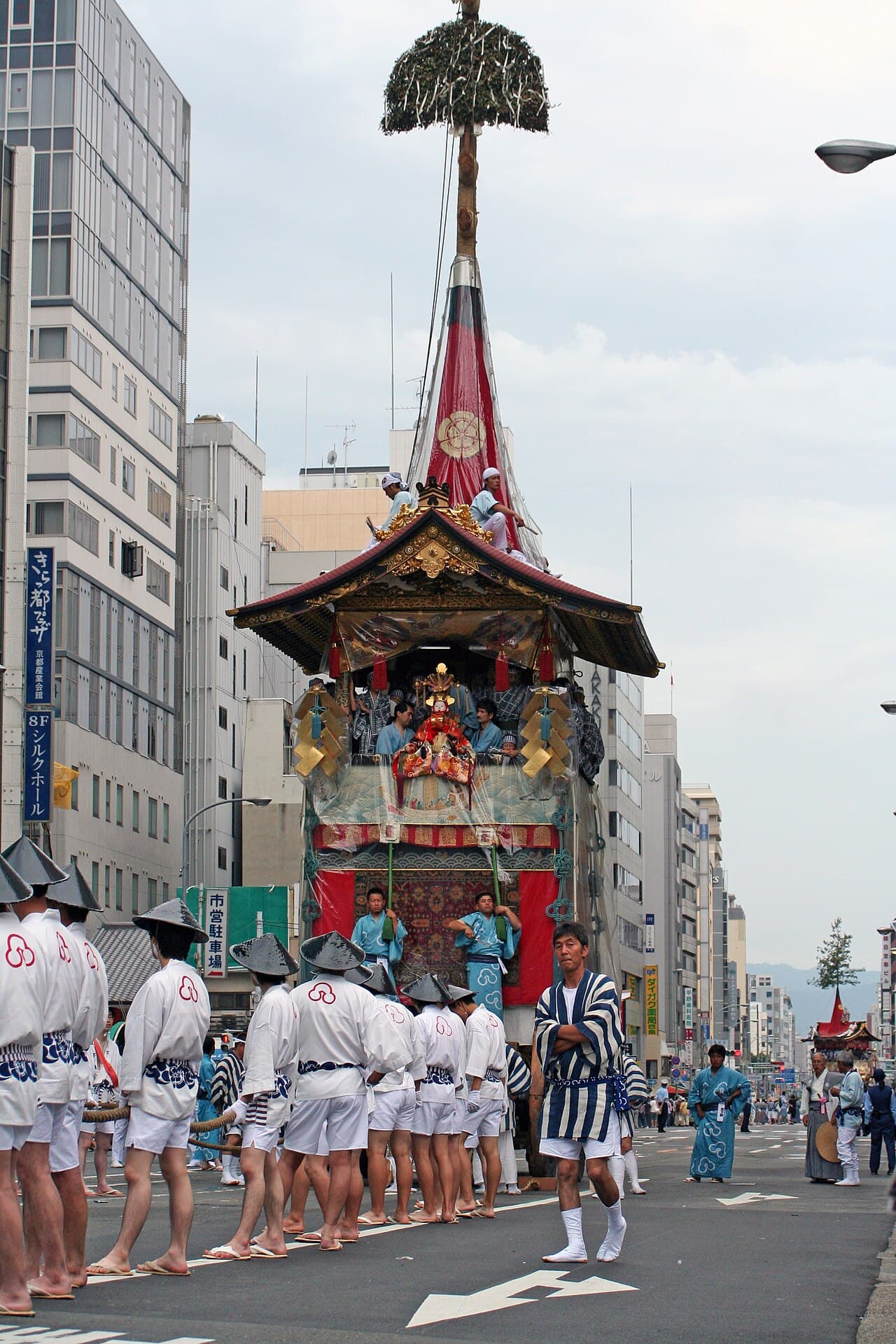
Why does Gion Matsuri run for the whole of July, and what are those lavish floats for? The answer lies in the festival's birth as a prayer to ward off plague. For dates and access, see the Gion Matsuri 2026 complete guide. This page is the story of why it endures.
It began with the Gion Goryo-e of 869
The origin dates to the Heian period, the year 869. When a plague swept the country, 66 halberds - one for each province of the time - were raised at Shinsen-en, the imperial garden in Kyoto, and portable shrines were sent from the Gion shrine, which enshrined Gozu Tenno, to pray for an end to the disease. This rite, the Gion Goryo-e, is the starting point of the festival. Its 1,150th anniversary was celebrated in 2019.
Gozu Tenno and 'goryo' belief
People of the age believed that epidemics and disasters were caused by the vengeful spirits (goryo) of those who had died unjustly. Within this belief in placating angry spirits, Gozu Tenno was revered as especially powerful against plague. The Gion shrine (today's Yasaka Shrine) enshrined him; in the Meiji-era separation of Shinto and Buddhism the deity was recast as Susanoo-no-Mikoto and the shrine renamed Yasaka.
How the floats became a 'moving museum'
From medieval times, the town merchants (machishu) used their growing wealth to compete in decorating the floats, draping them in imported tapestries until the procession became a 'moving museum'. Ownership of the festival shifted from the court to the townspeople - which is exactly why, though it was halted again and again by the Onin War and later destruction, the townspeople rebuilt it every time. That sense of 'our festival' is the engine behind 1,150 years of continuity.
Why it still continues (in short)
- A universal prayer: the wish for protection from disease and disaster transcends every era.
- Owned by the town: each float neighbourhood, not the government, sustains it - so the line of succession is clear.
- Heritage value: the Yamahoko float event is on UNESCO's Intangible Cultural Heritage list, with structures in place to preserve it.
Read next
- Going in person → Gion Matsuri 2026 complete guide (dates, Yoiyama, parade, access)
- A summer dance with the same 'why it endures' story → Gujo Odori origin: why a 400-year dance still continues
Frequently asked questions
- When and why did Gion Matsuri begin?
- Gion Matsuri began in 869 (Jogan 11) as the Gion Goryo-e, a purification rite held to quell a deadly epidemic sweeping the capital and the country. What started as an emergency ritual grew into an annual festival by around 970 (the late 10th century) and has continued for more than a millennium — marking its 1,150th anniversary in 2019 (Reiwa 1).
- What exactly happened in 869?
- In 869, 66 halberds (hoko) — one for each of Japan's traditional provinces — were erected at Shinsen-en garden, and on the 14th day mikoshi (portable shrines) carrying the plague deity's spirit were sent there to pacify it. This rite is called the Gion Goryo-e, and it is the direct origin of today's Gion Matsuri.
- What is a Goryo-e?
- A goryo-e was a ritual to appease vengeful spirits (goryo) and plague deities believed to cause epidemics, fires, floods and earthquakes. The Gion version enshrined the plague god to pray for release from disease, which is why the 869 rite took the form of a large public ceremony to lift the sickness afflicting Kyoto.
- What is the connection to Gozu Tenno and Yasaka Shrine?
- The 869 epidemic was blamed on the curse of Gozu Tenno (the Ox-Head Heavenly King), a deity syncretized with Susanoo-no-Mikoto and enshrined at Yasaka Shrine — formerly called Gion-sha, or Gion Shrine — which is where the festival gets its name. In 876, the monk Ennyo built a hall in the Gion grove at the foot of Higashiyama, an event tied to the shrine's founding.
- How old is Gion Matsuri, and has it ever stopped?
- Counting from its 869 origin, Gion Matsuri marked its 1,150th anniversary in 2019, making it over a millennium old. It has seldom failed to take place, though it was interrupted for roughly three decades during the Onin War in the late 15th century (from 1467) before being revived in 1500. The Yamahoko floats seen today emerged during the Muromachi period (1336–1573).