What Is a Mikoshi? Why Festivals Carry (and Shake) a Portable Shrine
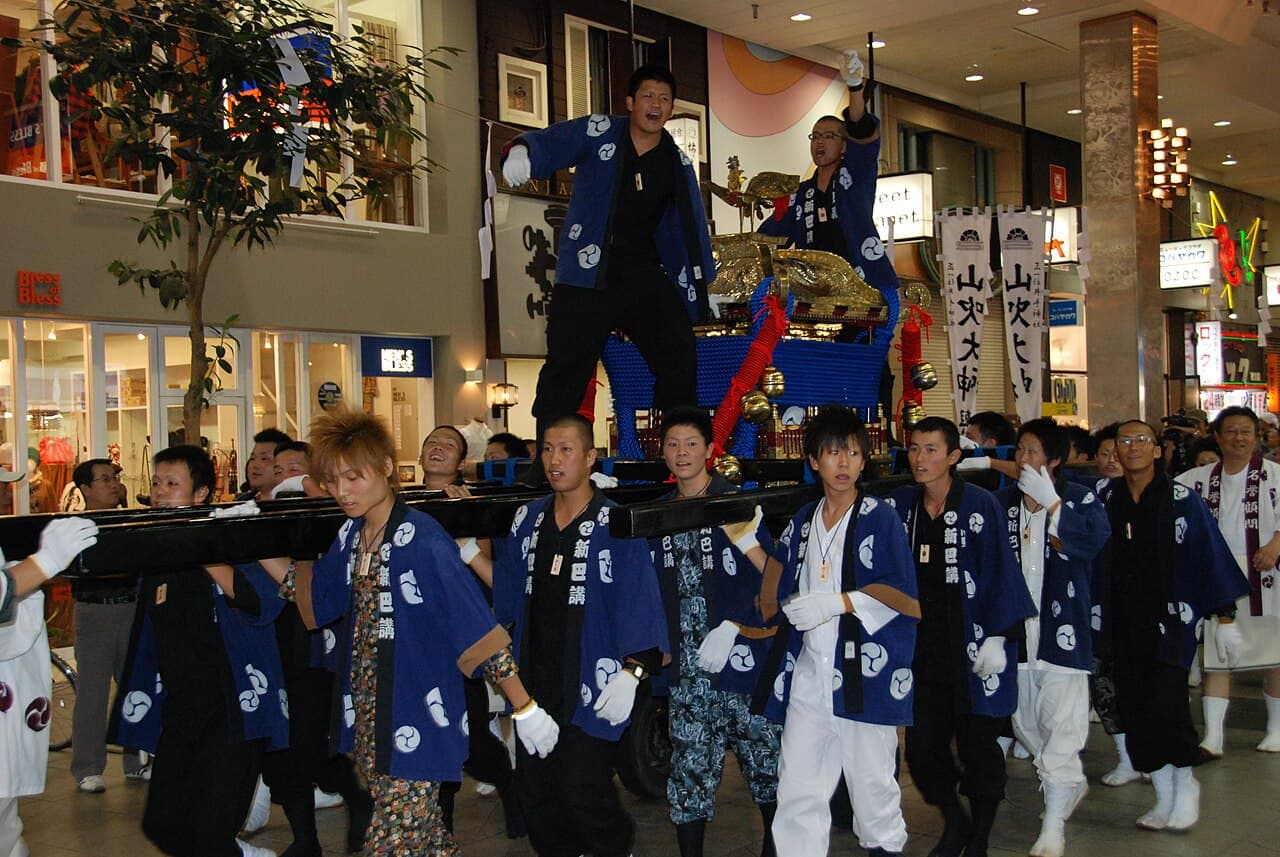
A mikoshi is a portable Shinto shrine — believed to carry a deity (kami) inside — that festival-goers shoulder on poles and carry through the streets, often shaking it side to side. It's the centrepiece of hundreds of Japanese matsuri, including two of Tokyo's biggest: Sanja Matsuri and Kanda Matsuri. This page is about what a mikoshi actually is and why it's carried the way it is.
What the word means
The kanji break down literally: mi (神, "god/spirit") + koshi (輿, "palanquin"), with the honorific prefix o- often added (o-mikoshi). Structurally it resembles a miniature version of a shrine building — pillars, walls, a roof, a veranda and a railing, all in miniature, usually gilded and elaborately decorated.
Why it's carried at all: a ride for the kami
At a shrine's main annual festival, the deity is believed to temporarily leave its usual home (the honden, main shrine hall) and be transferred into the mikoshi so it can be carried out among the community — sometimes to a temporary resting shrine (otabisho), sometimes on a full circuit of the neighbourhood it watches over. Carrying the kami through the streets is understood as bringing its blessing directly to the people, rather than requiring everyone to travel to the shrine.
Why bearers shake it — and shout wasshoi
Bearers carry the mikoshi on two, four, or occasionally six wooden poles resting on their shoulders, and at many festivals they deliberately shake or jostle it side to side. The common explanation is that the motion is meant to "amuse" or energize the kami inside, in keeping with a belief (found across Shinto practice) that an agitated, lively deity brings more vigorous blessings than a still one. Bearers chant "wasshoi" in rhythm to coordinate the lift and stay in step — a call-and-response that also builds the crowd energy the festival is known for.
How old is the practice?
The earliest well-documented use of a mikoshi dates to 749 CE, when the deity Hachiman is recorded as having been carried from Kyushu to Nara to pay respects to the newly built Great Buddha at Todai-ji — though the practice of carrying a deity's symbol likely predates that specific written record. Today it's the standard centrepiece of shrine festivals nationwide, from Tokyo's Sanja and Kanda Matsuri to hundreds of smaller neighbourhood festivals.
Not the same as a danjiri
Not every "shrine on the move" is a mikoshi. At Osaka's Kishiwada Danjiri Matsuri, for example, the danjiri are large wooden festival carts, weighing several tonnes, pulled at speed by hundreds of people on ropes rather than shouldered — a regional variant with its own separate tradition, not a mikoshi.
FAQ
What is a mikoshi? A portable Shinto shrine believed to carry a deity, carried on poles through the streets during a festival. "O-mikoshi" is the honorific form of the same word.
Why do people shake the mikoshi while carrying it? The shaking is generally explained as a way to energize or "amuse" the kami riding inside, based on the belief that a lively deity gives a more vigorous blessing.
Why do mikoshi bearers shout "wasshoi"? It's a rhythmic chant that keeps everyone lifting and stepping in unison, and it also builds the festival's collective energy.
Is a danjiri the same as a mikoshi? No. A mikoshi is carried on shoulders; a danjiri (as at Kishiwada) is a multi-tonne wooden cart pulled at speed by a large team using ropes — a different, regional festival tradition.
Read next
- See it at Tokyo's biggest mikoshi festival → Sanja Matsuri
- Another major Tokyo shrine festival → Kanda Matsuri
- A different kind of "shrine on the move" → Kishiwada Danjiri Matsuri
Frequently asked questions
- What is a mikoshi?
- A portable Shinto shrine believed to carry a deity, carried on poles through the streets during a festival. "O-mikoshi" is the honorific form of the same word.
- Why do people shake the mikoshi while carrying it?
- The shaking is generally explained as a way to energize or "amuse" the kami riding inside, based on the belief that a lively deity gives a more vigorous blessing.
- Why do mikoshi bearers shout "wasshoi"?
- It's a rhythmic chant that keeps everyone lifting and stepping in unison, and it also builds the festival's collective energy.
- Is a danjiri the same as a mikoshi?
- No. A mikoshi is carried on shoulders; a danjiri (as at Kishiwada) is a multi-tonne wooden cart pulled at speed by a large team using ropes — a different, regional festival tradition.