Setsubun Explained: Why Japan Throws Beans at Demons
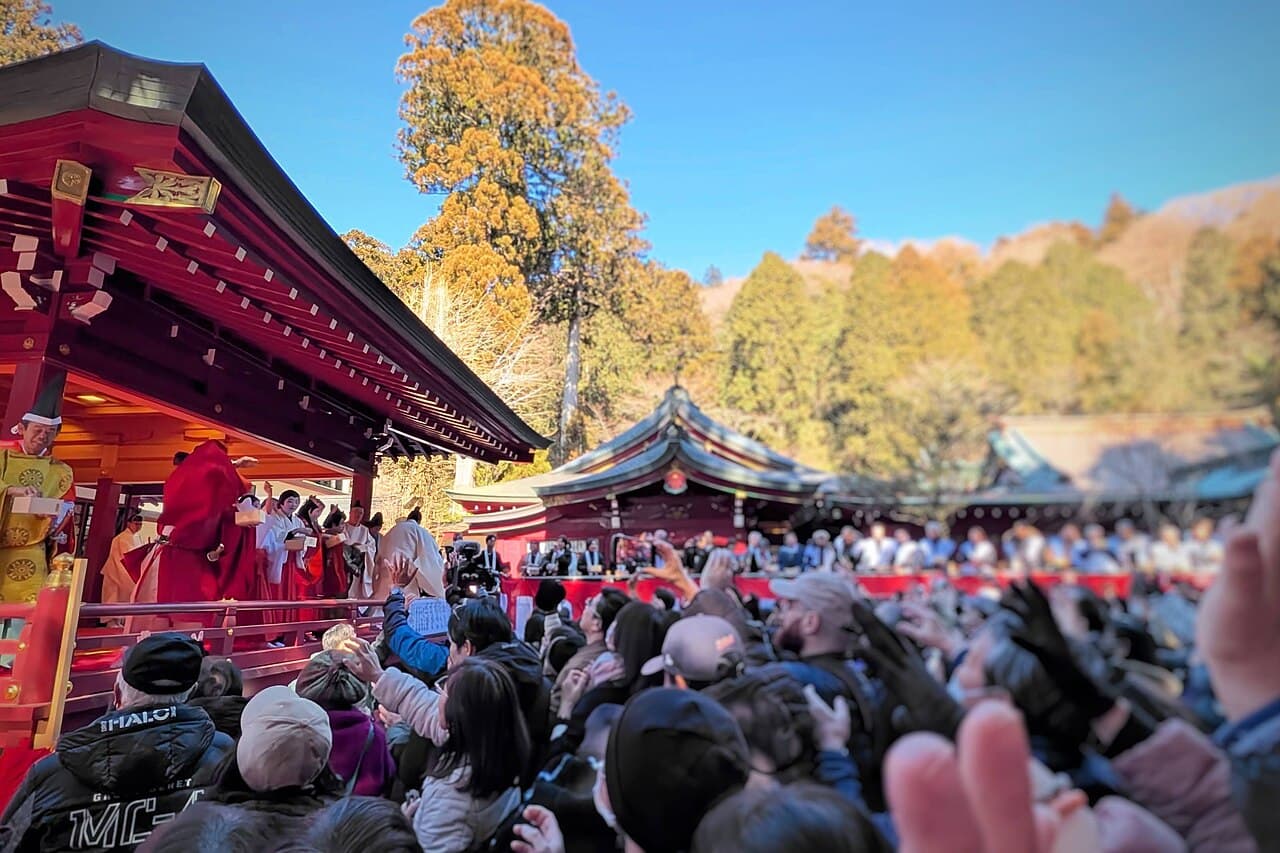
Setsubun is Japan's bean-throwing festival, held every year around February 3 — the day before the old calendar's start of spring — when people scatter roasted soybeans while shouting "Oni wa soto! Fuku wa uchi!" (Demons out, fortune in!) to drive off bad luck for the year ahead. Two Tokyo shrines run some of the country's biggest public versions — see our Naritasan Setsubun-e and Yoshida Shrine Setsubun Festival guides. This page is about what Setsubun actually means.
What the word means
Setsubun (節分) literally means "seasonal division" — the turning point between one season and the next. Under the old lunar calendar there were four such days a year, one before each season, but only the one before spring (risshun) kept the name and the ritual into modern practice.
Mamemaki: where bean-throwing comes from
The custom traces back to an ancient Chinese exorcism rite called tsuina, performed at the turn of the year to drive off evil spirits; it reached Japan and was adopted as a Heian-period (8th–12th century) court ritual. The specific practice of throwing beans while chanting "Oni wa soto, fuku wa uchi" is recorded from the Muromachi period (roughly 600 years ago), and became a widely observed household custom only from the 17th century onward — so Setsubun's bean-throwing developed in stages over many centuries, rather than starting as one single invented tradition.
Why beans, and why an oni?
The oni (demon/ogre) at Setsubun represents disease, misfortune and the disorder believed to slip into the world at the seasonal turning point. Roasted soybeans (fukumame, "fortune beans") are thrown at the oni — often played by a family member in a mask — or out of the front door, to symbolically purify the home and scatter that misfortune before it can take hold. Tradition also holds that eating one bean per year of your age afterward brings good luck for the year ahead.
Where to see it done publicly
At home, Setsubun is a quick family ritual; at major shrines and temples it becomes a public event, sometimes with sumo wrestlers, celebrities or maiko throwing beans (and sometimes small gifts) into the crowd from a stage. Our guides to Naritasan Setsubun-e and the Yoshida Shrine Setsubun Festival cover two of the best-known versions, including how to join the crowd.
FAQ
What is Setsubun? A Japanese festival held around February 3, the day before the old calendar's start of spring, when people throw roasted beans while chanting "Oni wa soto, fuku wa uchi" to drive off bad luck for the year ahead.
What does "Oni wa soto, fuku wa uchi" mean? "Demons out, fortune in" — the chant said while scattering beans at Setsubun, aimed at driving misfortune (the oni) out of the home and welcoming good fortune in.
Where does the bean-throwing tradition come from? It traces back to an ancient Chinese exorcism rite (tsuina), adopted as a Heian-period court ritual in Japan; the "Oni wa soto" chant is recorded from the Muromachi period, and the custom spread widely among households from the 17th century onward.
Can visitors join a Setsubun bean-throwing event? Yes — many shrines and temples hold public mamemaki where visitors can be in the crowd catching thrown beans (and sometimes small prizes); see our Naritasan and Yoshida Shrine guides for specifics.
Read next
- Tokyo's biggest public Setsubun → Naritasan Setsubun-e
- Kyoto's Setsubun with maiko → Yoshida Shrine Setsubun Festival
- Planning a February trip → Japan events in February
Frequently asked questions
- What is Setsubun?
- A Japanese festival held around February 3, the day before the old calendar's start of spring, when people throw roasted beans while chanting "Oni wa soto, fuku wa uchi" to drive off bad luck for the year ahead.
- What does "Oni wa soto, fuku wa uchi" mean?
- "Demons out, fortune in" — the chant said while scattering beans at Setsubun, aimed at driving misfortune (the oni) out of the home and welcoming good fortune in.
- Where does the bean-throwing tradition come from?
- It traces back to an ancient Chinese exorcism rite (tsuina), adopted as a Heian-period court ritual in Japan; the "Oni wa soto" chant is recorded from the Muromachi period, and the custom spread widely among households from the 17th century onward.
- Can visitors join a Setsubun bean-throwing event?
- Yes — many shrines and temples hold public mamemaki where visitors can be in the crowd catching thrown beans (and sometimes small prizes); see our Naritasan and Yoshida Shrine guides for specifics.