Gujo Odori Origin: Why a 400-Year Dance Still Continues (Dancing Beyond Class)
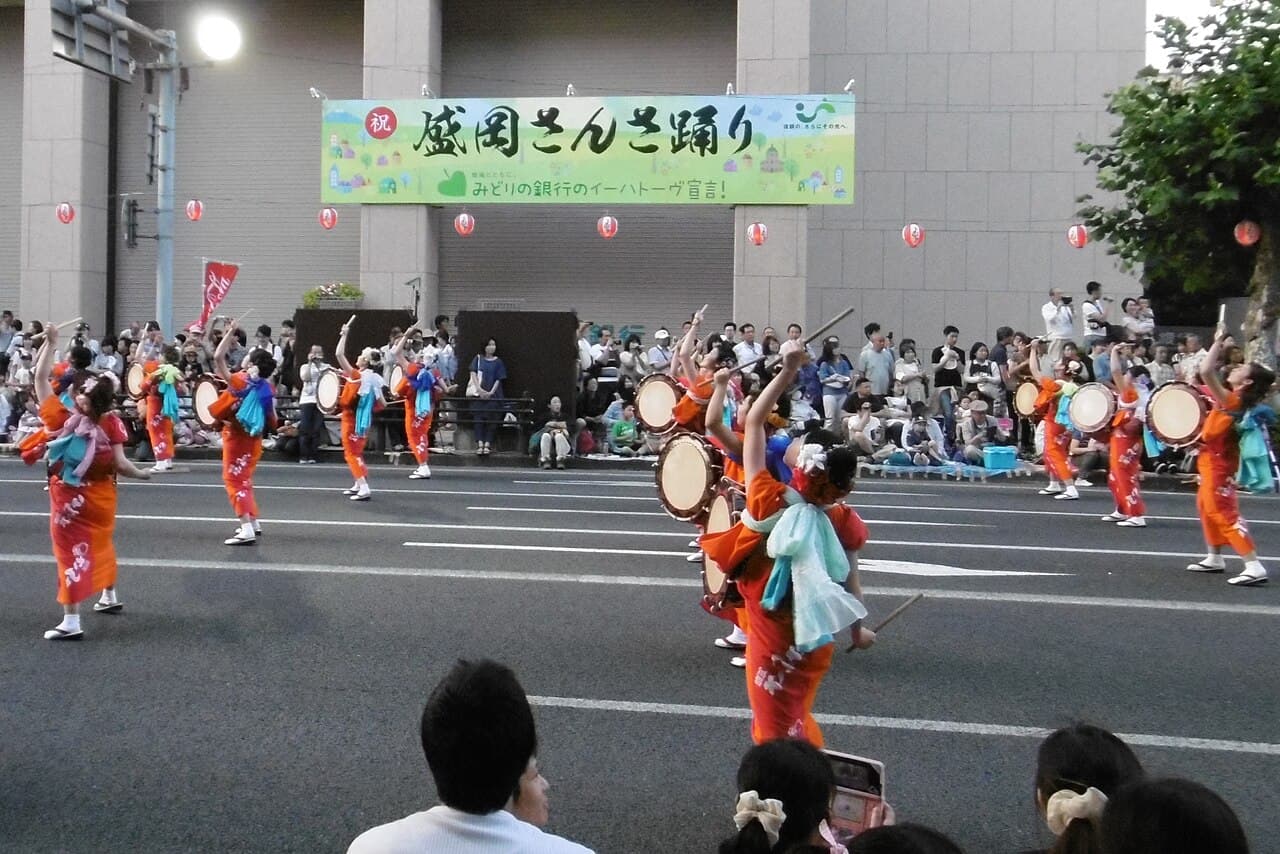
More than 30 nights of dancing, and all night long over Obon - Gujo Odori is the kind of festival that makes you ask, 'why has this lasted so long?' For dates and access, see the Gujo Odori 2026 all-night dance guide. This page is the story of why it endures.
It began in the early Edo period, by a lord's encouragement
Gujo Odori is said to have been started in the early Edo period by the Endo lords of Gujo-Hachiman castle to foster harmony within their domain. They gathered the Bon dances danced in villages across the domain into the castle town, and encouraged people that 'for the four days of Obon, all may dance freely without distinction of rank.' That became the foundation that survives today.
The exact date is debated. Some say the first lord, Endo Yoshitaka, began it around 1600; a cultural-property record points to the Kan'ei era (1624-44); and the preservation society holds that the third lord, Endo Tsunetomo, encouraged it after redeveloping the castle town in 1667.
The invention of 'no rank for these nights'
The heart of the festival is its design: samurai, townsfolk and farmers all dance in the same circle, beyond class. In an era of strict social hierarchy, for just a few nights of Obon everyone could dance as equals - a release valve for the people and a clever device for binding the community together. This is exactly why Gujo Odori is a dance everyone joins, not a spectacle to watch.
Why it still continues
- Because you can join: there is no line between audience and dancer, so anyone can step in each year - the tradition rarely loses its carriers.
- A preservation society sustains it: the Gujo Odori Preservation Society passes down the steps, the Gujo-bushi folk songs and the etiquette, keeping it alive as a structured culture.
- The whole town runs it: the castle-town streets themselves are the stage, run jointly by residents, shops and the city.
- Heritage value: it is designated a national Important Intangible Folk Cultural Property, with structures to preserve it.
That original spirit - that anyone can dance, beyond rank - keeps drawing people in as 'a festival I take part in myself.' That is the biggest reason it has lasted 400 years.
Read next
- Going in person → Gujo Odori 2026 all-night dance guide (dates, venue, access)
- A Kyoto summer festival's origin → Why Gion Matsuri exists: its 869 origin (Gozu Tenno & warding off plague)
- The wider Obon tradition this dance belongs to → What is Obon? Japan's festival of the dead, explained