Highlights
- Saki Matsuri float parade (Jul 17, 9:00 - 23 floats led by the Naginata-hoko)
- Lantern-lit Yoiyama evenings with Gion-bayashi music (Jul 14-16 & 21-23)
- The tsuji-mawashi float-turning at Shijo-Kawaramachi
Background & story
Traced to the Gion Goryo-e of 869, when 66 halberds (one per province) were raised at Shinsen-en and portable shrines from the Gion shrine of Gozu Tenno were sent to pray for an end to a plague.
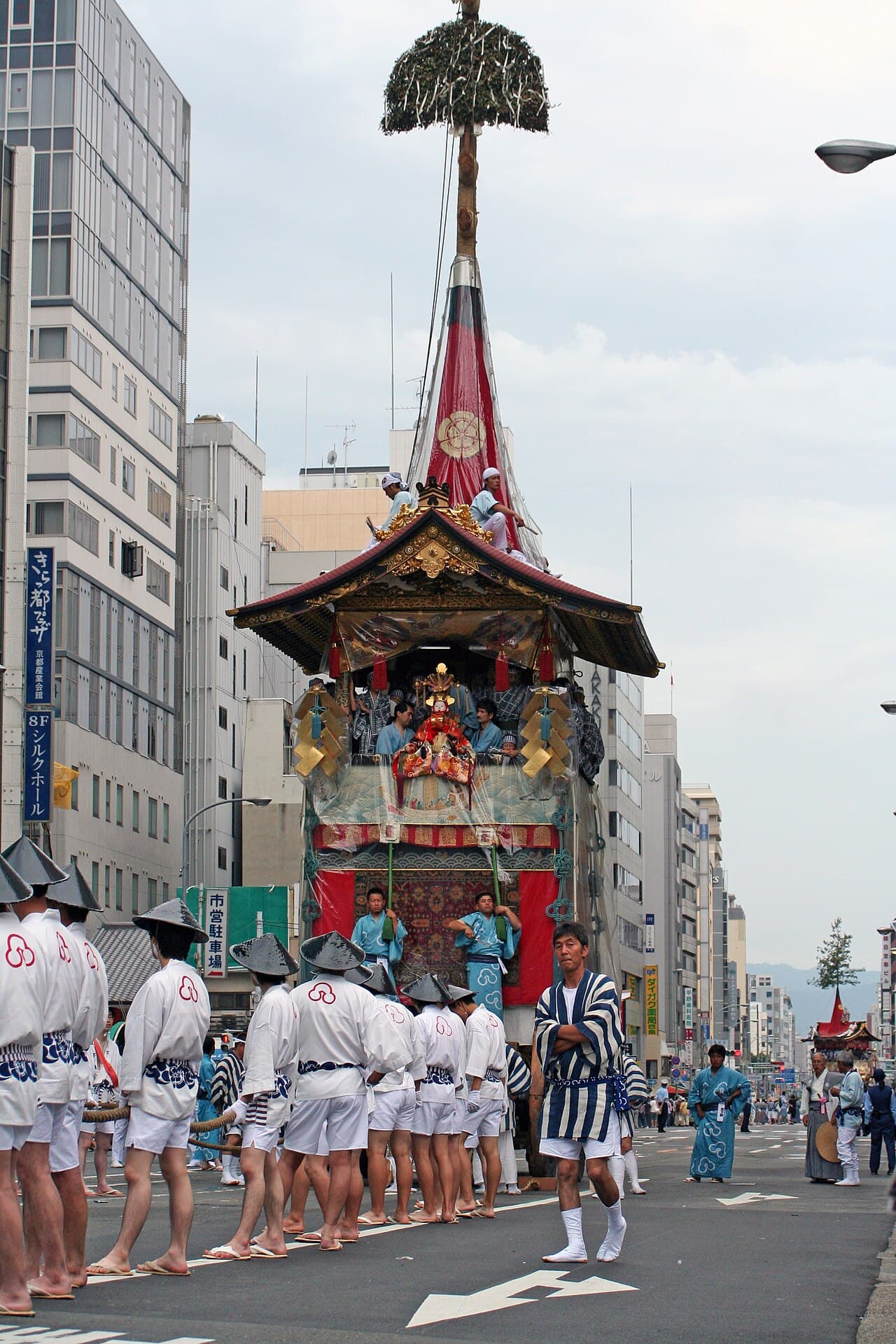
Gion Matsuri is the month-long festival of Yasaka Shrine in Kyoto and one of Japan's most famous matsuri. Its two highlights are Yoiyama — the festive evenings when lantern-lit floats fill the old merchant streets — and the Yamahoko Junko, the grand procession of towering wheeled floats through downtown Kyoto. This page is your one-stop go-info hub; for the story behind it, read Why Gion Matsuri exists — its 9th-century origin, explained.
2026 dates (confirmed schedule)
- Festival period: July 1 (Wed) - July 31 (Fri)
- Saki Matsuri (first half) Yoiyama: July 14 (Tue) - 16 (Thu); pedestrian-only zones on the 15th & 16th, roughly 6-11 pm
- Saki Matsuri float parade (Yamahoko Junko): July 17 (Fri), departs 9:00 - 23 floats led by the Naginata-hoko
- Shinko-sai (portable-shrine procession): July 17 (Fri), from about 6 pm
- Ato Matsuri (second half) Yoiyama: July 21 (Tue) - 23 (Thu)
- Ato Matsuri float parade: July 24 (Fri), departs 9:30 - 11 floats led by the Hashibenkei-yama
- Kanko-sai (return procession): July 24 (Fri), from about 5 pm
How to enjoy Yoiyama
In the evenings the floats stand in their home neighbourhoods with the distinctive konchikichin Gion-bayashi music playing. On the 15th and 16th, parts of Shijo and Karasuma streets become pedestrian-only and the food stalls are at their fullest; expect the biggest crowds 7-9 pm. Protective chimaki charms are handed out at each float's neighbourhood hall during the Yoiyama evenings.
Watching the float parade
The must-see moment is the tsuji-mawashi, the muscle-and-bamboo turning of a multi-tonne float through 90 degrees at the Shijo-Kawaramachi, Kawaramachi-Oike and Shinmachi-Oike corners. The first-half parade opens at 9:00 on July 17 when a child page cuts the sacred rope before the Naginata-hoko. Paid grandstand seating is set up along Kawaramachi and Oike streets.
Access
- Yasaka Shrine: about 5 min on foot from Keihan Gion-shijo Station, or 8 min from Hankyu Kyoto-kawaramachi Station.
- Yoiyama / parade area (around Shijo-Karasuma): directly connected to Karasuma subway 'Shijo' Station and Hankyu 'Karasuma' Station.
- Wide road closures apply during the festival - use public transport.
More in this cluster
- The culture & origin → Why Gion Matsuri exists: 869, Gozu Tenno and warding off plague
- Another great summer with dancing → Gujo Odori 2026: all-night dance, first-timer access guide
Detailed parade timings and grandstand-ticket sales are updated on this same page once confirmed. Always check the official Gion Matsuri Yamahoko Federation and Yasaka Shrine announcements for the primary source.
Good to know for visitors
- Getting there
- Yasaka Shrine is ~5 min walk from Keihan Gion-shijo Station, ~8 min from Hankyu Kyoto-kawaramachi Station. For the parade and Yoiyama, use Karasuma subway 'Shijo' Station or Hankyu 'Karasuma' Station. Open directions in Google Maps ↗
- Booking & entry
- Free to attend — details on the official page (button above).
- Language
- Mostly in Japanese — a translation app on your phone helps.
Frequently asked questions
- When is Gion Matsuri 2026 and when are the float processions?
- Gion Matsuri runs the entire month of July 2026, but its two highlights are the Yamaboko Junko float processions. The Saki (former) procession is Friday, July 17 from 9:00 AM, starting at Shijo-Karasuma; the Ato (latter) procession is Friday, July 24 from 9:30 AM, starting at Karasuma-Oike. The eve-night Yoiyama celebrations run July 14-16 (saki) and July 21-23 (ato).
- Is Gion Matsuri free to watch?
- Yes. Watching the processions from the street and walking among the floats during Yoiyama is completely free; the only paid option is the reserved grandstand (and premium) seating along Oike-dori. During the former-festival Yoiyama (July 14-16), the 23 saki floats are displayed and illuminated around Shijo-Karasuma; the 11 latter-festival floats are shown during July 21-23, for 34 floats in total across the two parades, all free to view up close.
- How much are the paid grandstand seats and how do I book?
- As of July 2026, general reserved grandstand seats on Oike-dori cost 8,000 yen for the front row and 6,000 yen from the second row onward, with higher-priced 'learning' (guided) seats for July 24 and premium seats for July 17 also available. General sales opened June 1, 2026 at 10:00 AM JST via Ticket Pia online (credit card only) and Seven-Eleven stores. Around 10,000 seats are offered for July 17 and 4,000 for July 24.
- Where are the best free spots to see the floats?
- During the former-festival Yoiyama (July 14-16), head to the Shijo-Karasuma, Muromachi and Shinmachi neighborhoods, where the saki yamaboko floats are displayed and illuminated to walk around and view up close for free. A pedestrian-paradise zone with food stalls operates July 15-16, roughly 18:00-23:00 on Shijo-dori (between Yasaka Shrine and Horikawa).
- How do I get to the festival area?
- Shijo-Karasuma, the festival core, is served directly by the Karasuma subway line (Shijo Station) and the Hankyu Kyoto line (Karasuma Station). On busy eve-nights, entering and exiting via Karasuma-Oike Station to the north rather than Shijo Station can help you avoid the worst crowds, especially when heading back toward Kyoto Station.
- What should I wear and how do I cope with the heat?
- Mid-July in Kyoto is extremely hot and humid, with daytime highs frequently topping 35°C, so carry water, use a fan and shade, and take heatstroke precautions. Many visitors wear a yukata (light summer kimono) for the Yoiyama evenings, a popular and comfortable choice that fits the festival atmosphere.
Getting there
Yasaka Shrine & downtown Shijo-Karasuma, Kyoto — 625 Gionmachi Kitagawa, Higashiyama Ward, Kyoto (Yasaka Shrine)