The Origin & Meaning of the Nagasaki Lantern Festival
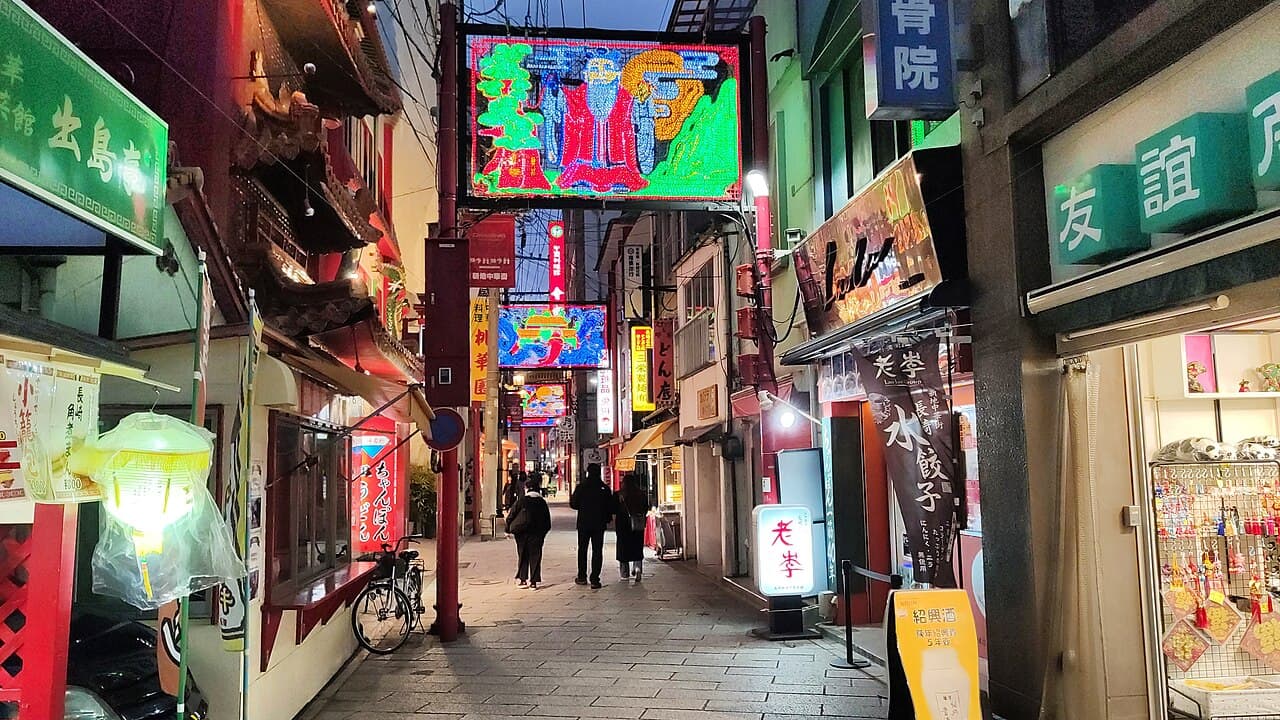
The Nagasaki Lantern Festival began in 1987, when the city's Chinese community lit lanterns in Shinchi Chinatown to celebrate the Lunar New Year (Spring Festival). In 1994 it expanded across central Nagasaki and was renamed the "Nagasaki Lantern Festival," growing into Japan's largest event of its kind. Today ~15,000 red lanterns, dragon dances and costumed parades carry prayers for prosperity, good fortune and safe voyages.
From a Chinatown Spring Festival (1987)
The festival's roots are small, local and heartfelt. In 1987, the Chinese residents of Shinchi Chinatown (新地中華街) strung red lanterns through their streets to mark Chunjie — the Lunar New Year, the most important holiday in the Chinese calendar. It was a community celebration first: a way for Nagasaki's Chinese families to keep their traditions alive in a Japanese port city, welcoming the new year with light, colour and noise to drive off bad luck.
That intimate origin still shapes the festival's soul. Even now, the densest, most atmospheric lantern clusters glow in and around Chinatown and Minato Park (湊公園), where the giant zodiac lantern objects are raised.
Citywide since 1994
By the early 1990s the celebration had outgrown a single quarter. In 1994, Nagasaki reimagined it as a city-wide tourism pillar, formally naming it the Nagasaki Lantern Festival and stretching the lanterns from Chinatown out to the arcades, riversides and temples of the centre. What had been a neighbourhood new-year party became a 17-day spectacle drawing visitors from across Japan and abroad.
For 2027 the festival runs Fri 5 Feb – Sun 21 Feb, timed to Chinese New Year (Feb 6) so it covers the first ~15 lunar days. See our Nagasaki Lantern Festival 2027 guide for the full dates, venues and how it all works.
Nagasaki's Chinese & Dutch trading heritage
The festival makes sense only against Nagasaki's singular history. For centuries this was Japan's one legally open window to the world:
- The Chinese quarter (Tojin-yashiki, 唐人屋敷) — Nagasaki hosted a walled Chinese residential compound where merchants, food, festivals and religion crossed into Japan. The lantern festival is the living descendant of that community.
- Dejima (出島) — the fan-shaped artificial island that housed Dutch traders during Japan's period of isolation, Nagasaki's link to Europe.
This double heritage — Chinese and Dutch — is why Nagasaki's culture, cuisine and street life feel unlike anywhere else in Japan, and why a Chinese-rooted festival became the city's proudest winter event.
What the lanterns, dragon and parades mean
Every element carries meaning:
| Element | What it means |
|---|---|
| Red lanterns (~15,000) | Red repels evil and invites luck; light guides good fortune into the new year |
| Giant zodiac lantern objects | Honour the animal of the incoming year and wish for a bright, prosperous season |
| Dragon Dance (龍踊り, jaodori) | The ~20 m dragon chases a pearl (the moon/sun), summoning rain, harvest and good fortune — performed every day |
| Lion dance & mask-changing (変面) | Drive off misfortune and delight the crowd with sudden face-swaps |
| Emperor's Parade (皇帝パレード) | ~150 people in Qing-dynasty costume re-enact an imperial procession — pure historical pageantry |
| Mazu Procession (媽祖行列) | Honours Mazu, the sea goddess, praying for safe voyages — a direct echo of Nagasaki's trading-port past |
The yellow lanterns reflected on the Nakashima River at Megane-bashi (めがね橋) are the signature photo, and the pink lanterns along the Doza River (銅座川) are quietly beautiful. For a full walkthrough of the best moments, see our highlights guide.
Why it moves people today
What began as a private new-year hope has become a gift the whole city gives. Walking beneath thousands of warm red lanterns as a 20-metre dragon weaves overhead, you feel a festival that is not staged for tourists but genuinely lived — a Chinese tradition rooted in Nagasaki's centuries-old Tojin-yashiki trading community, now shared freely with the world (viewing the lanterns is free). It is proof that Nagasaki's outward-looking spirit, forged through Chinese and Dutch trade, is still burning. Planning to go? Our access guide covers trains, the airport bus and the tram to the lanterns.
FAQ
When did the Nagasaki Lantern Festival start? It began in 1987 as the local Chinese community's Lunar New Year celebration in Shinchi Chinatown, and expanded citywide in 1994 when it took its current name.
What does the festival celebrate? The Lunar New Year (Spring Festival). The lanterns, dragon and parades are prayers for prosperity, good luck and safe voyages, rooted in Chinese tradition.
Why is it held in Nagasaki specifically? Nagasaki was Japan's one open port for centuries, home to a Chinese quarter (Tojin-yashiki) and Dutch traders on Dejima. The festival descends directly from that Chinese community.
What do the red lanterns mean? In Chinese tradition red repels evil and invites good fortune, and lantern light welcomes luck into the new year. About 15,000 are hung across central Nagasaki.
What does the dragon dance symbolise? The ~20 m dragon chases a pearl to summon rain, harvest and good fortune. It is performed every day of the festival.
Is the Nagasaki Lantern Festival free? Yes — viewing the lanterns and street venues is free. The nearby Confucius Shrine is a separate paid attraction. See our 2027 guide for details.
When is the 2027 festival? Friday 5 February to Sunday 21 February 2027, timed to Chinese New Year. See our Nagasaki Lantern Festival 2027 guide.
Frequently asked questions
- When did the Nagasaki Lantern Festival start?
- It began in 1987 as the local Chinese community's Lunar New Year celebration in Shinchi Chinatown, and expanded across the city in 1994 when it took its current name.
- What does the festival celebrate?
- The Lunar New Year (Spring Festival). The ~15,000 lanterns, dragon dances and parades are prayers for prosperity, good luck and safe voyages, rooted in Chinese tradition.
- Why is it held in Nagasaki specifically?
- For centuries Nagasaki was Japan's one open port, home to a walled Chinese quarter (Tojin-yashiki) and Dutch traders on Dejima. The festival descends directly from that Chinese community.
- What do the red lanterns mean?
- In Chinese tradition red repels evil and invites good fortune, and the lantern light welcomes luck into the new year. About 15,000 are hung across central Nagasaki.
- What does the dragon dance symbolise?
- The roughly 20-metre dragon chases a pearl to summon rain, harvest and good fortune. It is performed every day of the festival.
- Is the Nagasaki Lantern Festival free?
- Yes — viewing the lanterns and street venues is free. The nearby Confucius Shrine is a separate paid attraction (adults ¥880, as of July 2026).
- When is the 2027 festival?
- Friday 5 February to Sunday 21 February 2027, timed to Chinese New Year. See our Nagasaki Lantern Festival 2027 guide for full details.