Maizuru Red Brick Park & Repatriation Museum: Hours & Fees
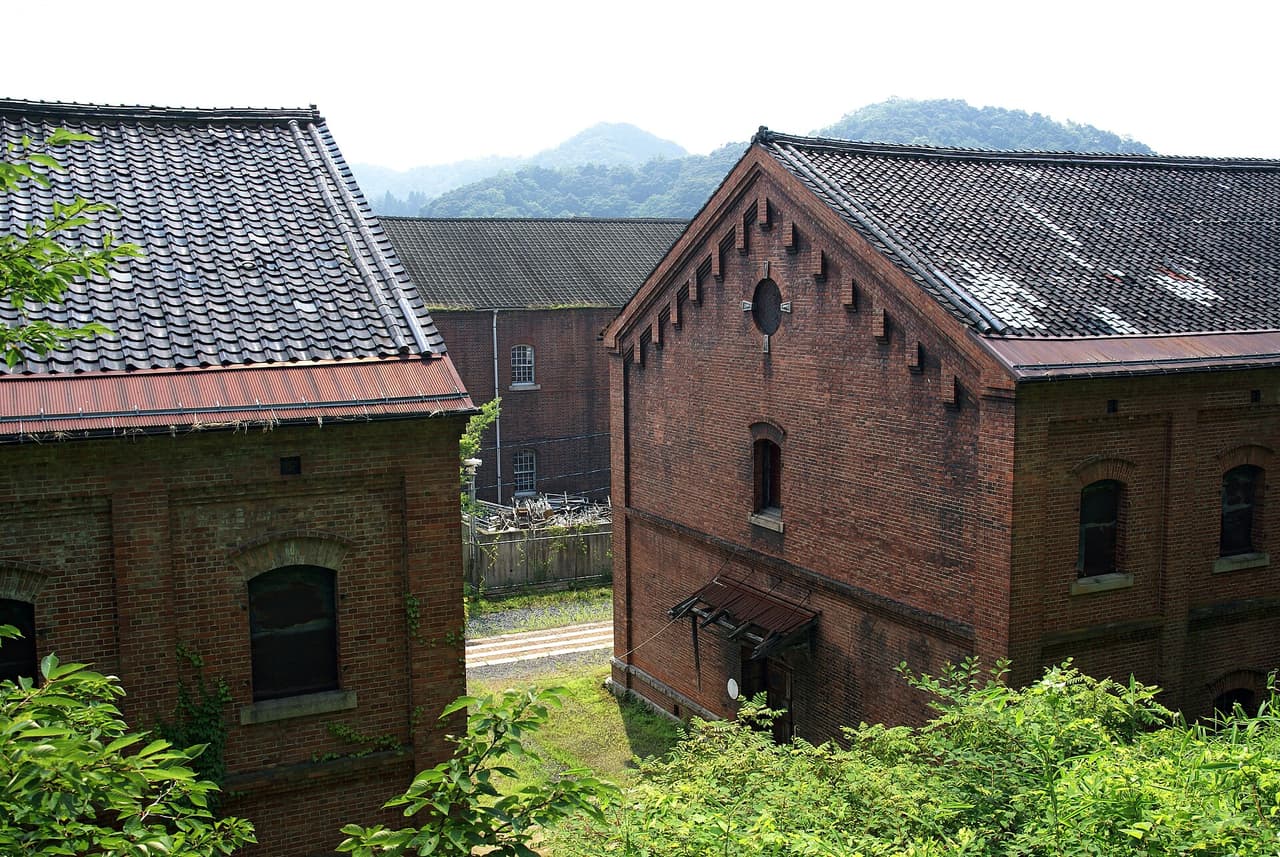
Maizuru, on the Sea of Japan coast of Kyoto Prefecture, is a town the old Imperial Japanese Navy built. Along the waterfront in East Maizuru (Kitasui) stand rows of Meiji- and Taisho-era brick warehouses, part of which are open as Maizuru Red Brick Park. On the hillside nearby, in Hikiage Memorial Park, the Maizuru Repatriation Museum tells the story of the postwar repatriation and the Siberian internment. This page was compiled from the sites' official information on 2026-09-17; fees and opening hours use only the figures each operator publishes, with no unverified guesses.
At a glance (the two sites — fees and hours as of 2026-09-17)
| Site | Highlights | Hours | Admission |
|---|---|---|---|
| Maizuru Red Brick Park (incl. the Brick Museum) | Nationally listed red brick warehouses; a museum devoted to brick; the free exhibition at the City Memorial Hall; a harbour cruise | 9:00–17:00 | Varies by building. Combined ticket with the Repatriation Museum: ¥600 adult / ¥200 student |
| Maizuru Repatriation Museum | Repatriation and Siberian-internment records inscribed on UNESCO's Memory of the World | 9:00–17:00 (last entry 16:30) | Adult ¥400 / student ¥150 (free for city residents/students) |
Closing days: the Repatriation Museum is closed 29 Dec–1 Jan and every Wednesday (the next weekday if that Wednesday is a holiday).
Maizuru Red Brick Park — warehouses, eight of them an Important Cultural Property
The Maizuru Naval District was established here in 1901 (Meiji 34), and over the following decades the navy put up many brick buildings. Twelve warehouses survive in the East Maizuru / Kitasui district — nine built in the Meiji period (1901–1903) and three in the Taisho period (1918–1921). Eight of them — nos. 1 to 8 — were designated a national Important Cultural Property on 9 June 2008, under the name "Former Maizuru Naval District Warehouses" (舞鶴旧鎮守府倉庫施設), and they are also listed as Modernization Industrial Heritage. The designation itself covers seven buildings — four armoury stores (the torpedo store, the reserve-ship armoury, the shell and rifle store, and the sundries and deposited-arms store) and three supply stores (Cultural Heritage Online, checked 2026-09-18) — plus one further building listed by attachment, which is how the numbering reaches eight (the numbering and the attached designation: ja.wikipedia). An Important Cultural Property is a different designation from a National Treasure.
Five of them are open to the public as Maizuru Red Brick Park:
- The Brick Museum (No.1) — the building is the former navy torpedo store (completed 1903, Meiji 36), one of the older surviving steel-framed brick structures in Japan. Since 1993 it has housed a museum whose subject is brick itself, as a building material, around the world.
- Maizuru City Memorial Hall (No.2) — the former reserve-ship armoury (1902). Its second floor has a free exhibition on Maizuru's history, the naval district and the postwar repatriation, and displays a dugout canoe roughly 5,300 years old excavated from the Uranyu site. There is a café.
- Maizuru Chie-no-Kura (No.3) — the former shell and rifle store (1902), restored to its original appearance and reopened in 2007.
- Brick Studio (No.4) / Brick Event Hall (No.5) — open since 2012, used for events and workshops.
Opening hours for the buildings are 9:00–17:00. The address is 1039-2 Kitasui, Maizuru, Kyoto 625-0080 (tel. 0773-66-1096), and the official site has English, Chinese and Korean pages.
A favourite film location
Because the warehouse group survives so intact, it is prized as a piece of industrial heritage and has been used for many films and dramas — among them Saka no Ue no Kumo, Yamato, The Emperor in August (2015), Fueled: The Man They Called a Pirate (2016), Fullmetal Alchemist (2017) and The Great War of Archimedes (2019).
The naval-port harbour cruise
A "naval heritage" harbour cruise departs from the pier at the park, looping around the bay for a view of Japan Maritime Self-Defense Force vessels from the water. Sailing days, times and fares change with the season, so check the Maizuru Tourism Association's official page before you go.
Maizuru Repatriation Museum — UNESCO Memory of the World
When the Second World War ended, about 6.6 million Japanese were stranded overseas — in the former Manchuria, on the Korean Peninsula, across the South Pacific and elsewhere. Eighteen repatriation ports were set up around the country to bring them home, and Maizuru was one of them. From the arrival of the first ship, the Unzen Maru, on 7 October 1945 until the last ship, the Hakusan Maru, on 7 September 1958, Maizuru was the only port to keep operating for the full 13 years, receiving about 660,000 repatriates and demobilised soldiers.
The Maizuru Repatriation Museum opened in April 1988 to pass this history on. It was renewed in September 2015, and on 10 October 2015, 570 items from its collection were inscribed on UNESCO's Memory of the World — the "Return to Maizuru Port" records of the Siberian internment and the repatriation. The museum holds about 16,000 items donated from across Japan and shows more than 1,000 in its permanent display.
- Address: 1584 Taira, Maizuru, Kyoto 625-0133, in Hikiage Memorial Park (tel. 0773-68-0836)
- Hours: 9:00–17:00 (last entry 16:30)
- Closed: 29 Dec–1 Jan and every Wednesday (the next weekday if it is a holiday)
- Admission: adult ¥400; student (elementary to university) ¥150 — free for students living or studying in the city; groups of 20+ ¥300 / ¥100
- Combined ticket: ¥600 (adult) / ¥200 (student), valid for both the Repatriation Museum and the Brick Museum
- Holders of a disability or atomic-bomb survivor's certificate are admitted at half price.
Eating in Maizuru — nikujaga and navy curry
The navy left its mark on the local food, too. Maizuru bills itself as the home of nikujaga (the meat-and-potato stew — a claim it shares with Kure in Hiroshima), and you can eat navy / JMSDF curry around town, alongside local specialities such as Maizuru kamaboko fish cake and Manganji sweet peppers.
Getting there
The Red Brick Park is on the waterfront in East Maizuru (Kitasui); the nearest station is Higashi-Maizuru on the JR Maizuru and Obama lines. The Repatriation Museum sits above the bay in Hikiage Memorial Park and is easiest to reach by bus or car. A sightseeing loop bus linking the two sides of the city runs in some seasons — check the current timetable and fares on the Red Brick Park and Maizuru Tourism Association access pages. From the Kyoto side, JR limited-express trains reach Maizuru. If you are combining Maizuru with festivals elsewhere in the prefecture, see the Kyoto festival, dance and temple culture calendar.
When and how this was checked
This page was compiled on 2026-09-17 from the Maizuru Repatriation Museum official site, the Maizuru Red Brick Park official site, the cultural-property record for the Maizuru red brick warehouses, and the Sea of Kyoto DMO / Maizuru Tourism Association. The cultural-property designation — its name, its date and the seven buildings it covers — was checked on 2026-09-18 against Cultural Heritage Online. Fees, hours and sailings can change; check each official page before you visit.
Frequently asked questions
- What are the opening hours and admission for Maizuru Red Brick Park?
- The buildings are open 9:00–17:00. Admission varies by building, but a combined ticket covering the Brick Museum and the Maizuru Repatriation Museum is ¥600 for adults and ¥200 for students. The exhibition on the second floor of the City Memorial Hall is free. Check the official site for current prices.
- How much is the Maizuru Repatriation Museum, and when is it closed?
- Admission is ¥400 for adults and ¥150 for students (elementary to university); students who live or study in the city enter free. Groups of 20 or more pay ¥300 / ¥100. It is closed 29 December–1 January and every Wednesday (the next weekday if that Wednesday is a public holiday). Hours are 9:00–17:00, with last entry at 16:30.
- What is Maizuru's UNESCO Memory of the World?
- On 10 October 2015, 570 items held by the Maizuru Repatriation Museum were inscribed on UNESCO's Memory of the World — the 'Return to Maizuru Port' records of the Siberian internment and the postwar repatriation. From 1945 to 1958 Maizuru was the only Japanese port to operate for the full 13 years, receiving about 660,000 repatriates and demobilised soldiers.
- How many red brick warehouses are there, and when were they built?
- Twelve red brick warehouses survive in the East Maizuru / Kitasui district — nine built in the Meiji period (1901–1903) and three in the Taisho period (1918–1921). Built by the old Imperial Japanese Navy, eight of them (nos. 1–8, one an attached designation) were designated a national Important Cultural Property on 9 June 2008 as the 'Former Maizuru Naval District Warehouses'; five are open to the public as Maizuru Red Brick Park.
- Which films were shot at Maizuru Red Brick Park?
- It has appeared in films and dramas including Saka no Ue no Kumo, Yamato, The Emperor in August (2015), The Man They Called a Pirate (2016), Fullmetal Alchemist (2017) and The Great War of Archimedes (2019).