Fukuchiyama Castle: the keep Akechi Mitsuhide built and 8,500 citizens rebuilt (hours, fees, access)
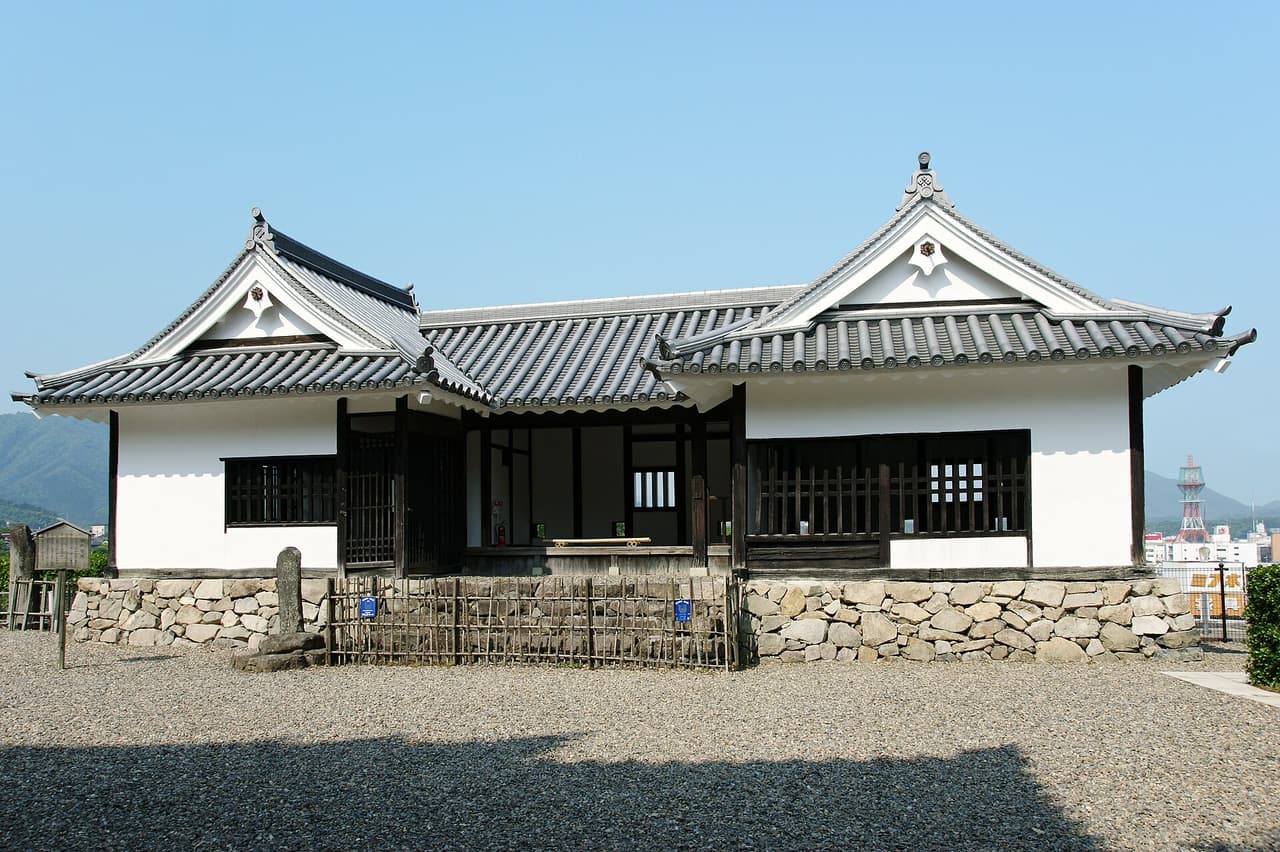
Fukuchiyama Castle, in Kyoto Prefecture's northern hills, was built by Akechi Mitsuhide in 1579; admission is 360 yen for adults and 110 yen for children, and it is open 9:00-17:00 with last entry at 16:30. It is about a 15-minute walk from Fukuchiyama Station on the JR and Kyoto Tango Railway lines. The keep standing today is not the original: that one was pulled down after the Meiji government's 1873 Castle Abolition Order, and the present one was rebuilt in 1986 with money raised from residents at 3,000 yen per roof tile. This page was compiled from the official Fukuchiyama Castle site (run by the City of Fukuchiyama) on 18 September 2026, and uses only the figures the operator publishes.
At a glance
| Item | Detail |
|---|---|
| Admission | Adult 360 yen / child 110 yen (groups of 30+: 320 / 90 yen) |
| Three-museum ticket | Adult 900 yen / child 400 yen (keep + Sato Taisei Memorial Art Museum + Fukurail railway museum) |
| Hours | 9:00-17:00 (last entry 16:30) |
| Closed | 28-31 December, 4-6 January, plus occasional unscheduled closures |
| Castle park | Always open, free. Lit at night from sunset to 22:00 |
| Access | About 15 minutes' walk from Fukuchiyama Station (JR / Kyoto Tango Railway) |
| Parking | Free: about 70 cars (Yurano Garden car park); 5 buses by reservation |
Through the 2026 financial year the castle also opens on Tuesdays, normally its closing day, to mark the 40th anniversary of the rebuild. Unscheduled closures are separate: the castle has announced it will be shut on Thursday 24 and Friday 25 September 2026. Adult admission rose from 320 to 360 yen on 1 April 2026; child and combined-ticket prices were unchanged.
Why go now: the 40th-anniversary exhibition (until 30 November 2026)
Forty years have passed since the keep was rebuilt, and the castle is running commemorative exhibitions across the year. The second instalment, "The Power of Citizens: the One-Tile Campaign and the Rebuilding of the Keep", runs from 1 August to 30 November 2026 inside the keep itself.
On display: documents showing how the plan was revised as world events intervened; roof tiles of the same type used in the campaign; period photographs of donors' names being written onto the tiles; and the path from the 1973 basic design drawings to the completion ceremony on 9 November 1986, told through plans, photographs and original newspapers. A third instalment covering construction through to completion is announced for the winter.
For this year, in other words, Fukuchiyama Castle is not only a castle to look at but a record of the people who put it back up.
The castle Akechi Mitsuhide built
The castle sits on a spur of high ground pushing into the Yura River - a site used since antiquity, as Yayoi-period pottery found here shows.
Oda Nobunaga ordered Mitsuhide to subdue the province of Tanba in 1575. He won over most of the local lords, but in January 1576 Hatano Hideharu defected and Mitsuhide was routed. He returned, besieged Yakami Castle for more than six months and took it in June 1579, then brought down Onigajo and Kuroi castles and completed the conquest of Tanba. Nobunaga is recorded as praising the achievement as without equal in the realm.
Mitsuhide then built a castle and a castle town here, and is said to have named it Fukuchiyama using the "chi" character from his own name, Akechi. He became its first lord and installed his son-in-law Akechi Hidemitsu as castle warden. In his short rule he is remembered for waiving the land levy and carrying out flood-control works, and in Fukuchiyama he is still spoken of as a good ruler rather than the traitor of the standard account.
Much about Mitsuhide himself is unsettled. His birth year is given as either 1528 or 1516, and his birthplace as either Kani or Ena district in Mino province; neither is confirmed. He enters the historical record around 1569, after he began serving Nobunaga.
The first floor of the keep displays material on him. The centrepiece is the Akechi house military code, held by Goryo Shrine: a set of regulations covering how his warriors and foot soldiers were to fight and how duties were assessed against each man's stipend. It is described as the only surviving military code from any of Nobunaga's vassal houses, and it is dated 2 June 1581 - exactly one year to the day before the Honno-ji Incident. A small cinema on the same floor shows a 16-minute film based on the Battle of Yamazaki and a 5-minute one on the Tanba campaign.
The second floor covers the later lords, including the Kutsuki family, who held the domain for 13 generations and some 200 years. The fourth floor is a lookout over the castle town to the north.
Older than the building: walls, a well, a guardhouse
The keep dates from 1986, but the stone walls are Mitsuhide's.
- The stone walls run from the keep's base through the inner bailey and are built nozurazumi - natural, undressed stones stacked as found. They have stood for over 400 years. What makes them unusual is the repurposed stone: five-ring funerary pagodas and other carved Buddhist stonework used as building material. The castle archaeologist Chida Yoshihiro writes on the official site that this speaks to Mitsuhide's practical turn of mind, and that Fukuchiyama is the only place where stone walls of this era survive in such good condition - which makes them academically valuable.
- The stone drop is the opening through which defenders attacked anyone climbing the wall. It normally sits in the wall below the first-floor roof, where anyone can see it. At Fukuchiyama it was built into the second floor instead. From a distance the castle looks as though it has none. Chida calls it an intelligent castle.
- The Toyoiwa well, east of the keep, is 2.5 m across and 50 m deep - among the deepest inner-bailey wells in Japan. It was cut through bedrock down to the water table and still holds clear water.
- The Akagane-mon guardhouse once stood at the second bailey's entrance. It was moved to the keep's stone base during the Taisho era and moved back to the inner bailey when the keep was rebuilt. It is one of the few structures to survive the castle's demolition.
The official site lists the castle's distinctions: it is the only castle built by Mitsuhide that has a keep today, the only keep in the Kita-Kinki region, the only keep in Kyoto Prefecture you can climb, and the first castle in Japan to run entirely on renewable energy, night illumination included.
The keep 8,500 citizens paid for
The 1873 Castle Abolition Order took the keep down and the buildings were sold off. The moats and ponds were filled with earth cut from the second bailey. What survived was the keep's stone base and the Akagane-mon guardhouse.
The turn came in 1968, when a drawing of the Edo-period castle was found in Shimabara, Nagasaki - the domain to which the former Fukuchiyama lord Matsudaira Tadafusa had been transferred in 1669. Interest in rebuilding grew. Basic design drawings were produced in 1973 and geological survey work began, then the oil crisis stopped everything.
Nishida Masakichi, head of the Fukuchiyama Chamber of Commerce, restarted it. In 1984 he formed a reconstruction association and launched the one-tile campaign: a donation of 3,000 yen, the cost of a single roof tile. The idea was that a roof laid with tiles bearing donors' names would let every resident feel like the lord of the castle.
Around 8,500 individuals and organisations gave more than 500 million yen. Total construction cost was about 810 million yen, so citizens covered over 60 per cent of it. The keep was completed on 9 November 1986.
Four local calligraphers wrote the names. Working from slips recording each donor's name and address, they inked roughly 8,500 tiles over a year of weekends. Their workshop was a tent pitched on the bare ground inside the surviving walls; in winter they hung curtains around it against the cold. Writing on a curved tile proved harder than expected, so they settled on a semi-cursive hand that was quick and legible. The tiles themselves were special smoked-silver ones made in Nara.
Those 8,500 names are on the roof now.
Mitsuhide in the town
- Goryo Shrine (238 Nakano, Fukuchiyama) enshrines Mitsuhide as a deity and holds the military code above, along with two other letters in his hand, as shrine treasures. Townspeople began worshipping him in the early-middle Edo period, as the founder of the world they lived in. The shrine was established on Hirokoji, a broad street laid out as a firebreak, so the castle on the north-south axis and the shrine on the east-west axis - both tied to Mitsuhide - became the two centres of the modern town.
- Jagahana-on-yabu, commonly called Akechi's thicket, is a bamboo grove said to have been planted by Mitsuhide to protect the flood-prone town. It once ran roughly 500 m long and 10-30 m wide; only the northern end remains, now known as a nesting site for wild birds. The official site notes that this flood-control tradition took shape in the Showa era or later rather than in Mitsuhide's own time. You can see the grove from the fourth-floor lookout, to the right of the town.
Eating here: meat and sweets
Fukuchiyama once had one of western Japan's three great livestock markets and handled a good deal of the meat trade. The legacy is measurable: 22.86 yakiniku restaurants per 100,000 residents. A MEET x MEAT festival is held each October, and - the surrounding Tanba region being fertile country - a sweets festival runs the same month.
Getting there, and before you go
- By train - about 15 minutes on foot from Fukuchiyama Station (JR and Kyoto Tango Railway); buses also run. From Kyoto, a limited express on the JR Sanin Main Line takes about 1 hour 15 minutes; from Osaka, about 1 hour 30 minutes on the JR Fukuchiyama Line.
- By car - roughly 3 km along Route 9 from the Fukuchiyama interchange on the Maizuru-Wakasa Expressway. From the Kyoto Jukan Expressway, use the Kyotanba-Mizuho interchange.
- Parking - free: about 70 car spaces at the Yurano Garden car park, and 5 bus spaces by advance reservation. Groups and coaches must apply in advance (tel/fax 0773-23-9564).
- Castle seal and stamp - a goshuin castle seal is sold at reception for 300 yen, and the castle holds a stamp for the Continued Top 100 Japanese Castles rally. On days the keep is closed the stamp cannot be pressed there - the tourist information office at the north exit of JR Fukuchiyama Station has one as well.
- Tourist information - Fukuchiyama Tourist Information Office (439 Ekimae-cho, Fukuchiyama; immediately outside the station's north exit; tel 0773-22-2228). Rental bicycles, left luggage and mobile battery rental are available. It opens 9:00-18:00, changing to 9:00-17:00 from 1 October 2026.
- Guides - book at the tourist office. The castle costs from 2,000 yen; a city tour is 3,000 yen for up to two hours, then 1,000 yen per additional hour.
Nearby, and next
Still in northern Kyoto Prefecture, the old naval port of Maizuru and its red brick park and repatriation museum are within reach of Fukuchiyama for a day. For the wider year of events across the prefecture, see our Kyoto events guide for travellers; and to compare a rebuilt keep with an original one, Himeji Castle in cherry blossom season.
Frequently asked questions
How much does Fukuchiyama Castle cost? Admission is 360 yen for adults and 110 yen for children, tax included. Groups of 30 or more pay 320 and 90 yen. A combined ticket for the keep, the Sato Taisei Memorial Art Museum and the Fukurail railway museum is 900 yen for adults and 400 yen for children (860 and 380 for groups). Holders of a disability certificate and one carer are admitted at half price, and the Mirairo ID app is accepted.
What are the opening hours, and when is it closed? It opens 9:00-17:00, with last entry at 16:30. It closes 28-31 December and 4-6 January, plus occasional unscheduled days. Through the 2026 financial year it also opens on Tuesdays, normally its closing day, to mark the 40th anniversary of the rebuild. Unscheduled closures announced for 2026 include Thursday 24 and Friday 25 September.
Who built Fukuchiyama Castle? Akechi Mitsuhide. Ordered by Oda Nobunaga to take the province of Tanba, he completed the conquest in 1579 and built a castle and castle town here, installing his son-in-law Akechi Hidemitsu as castle warden. The keep you see today, however, is a 1986 reconstruction funded by residents after the original was demolished under the 1873 Castle Abolition Order.
What was the one-tile campaign? A public appeal for donations of 3,000 yen - the cost of one roof tile on the keep. It ran for four years from 1983, and about 8,500 individuals and organisations gave more than 500 million yen, over 60 per cent of the roughly 810 million yen the rebuild cost. Four local calligraphers inked each donor's name onto the back of a tile, and those names are still on the roof.
How do I get from Fukuchiyama Station to the castle? It is about a 15-minute walk from Fukuchiyama Station on the JR and Kyoto Tango Railway lines, and buses run as well. From Kyoto, a limited express reaches Fukuchiyama in about 1 hour 15 minutes on the Sanin Main Line; from Osaka it is about 1 hour 30 minutes on the Fukuchiyama Line. By car it is about 3 km along Route 9 from the Fukuchiyama interchange, with about 70 free parking spaces at Yurano Garden.
What is worth seeing inside? On the first floor, the Akechi house military code held by Goryo Shrine - the only surviving military code from Nobunaga's vassal houses, dated 2 June 1581. On the fourth floor, the lookout over the castle town. And outside the building, the stone walls, which are older than it: undressed stone stacked in the Sengoku manner and shot through with repurposed funerary pagodas. The Toyoiwa well east of the keep is 2.5 m across and 50 m deep, among the deepest inner-bailey wells in Japan. Until 30 November 2026 the 40th-anniversary exhibition is also on.
When and how this was checked
This page was compiled on 18 September 2026 from the official Fukuchiyama Castle site run by the City of Fukuchiyama - its admission and access page, the exhibition contents of the keep, Story 2: the Showa reconstruction, the castle and castle town guide and the announcement of the 40th-anniversary exhibition - together with the Fukuchiyama Tourism Association. Fees, hours, unscheduled closures and exhibition dates can change; check the official site before you travel.
Update log: published 2026-09-18, reflecting the admission change of 1 April 2026, Tuesday opening through FY2026, the second 40th-anniversary exhibition (to 30 November 2026) and the tourist office's new hours from 1 October 2026.
Frequently asked questions
- How much does Fukuchiyama Castle cost?
- Admission is 360 yen for adults and 110 yen for children, tax included. Groups of 30 or more pay 320 and 90 yen. A combined ticket for the keep, the Sato Taisei Memorial Art Museum and the Fukurail railway museum is 900 yen for adults and 400 yen for children (860 and 380 for groups). Holders of a disability certificate and one carer are admitted at half price, and the Mirairo ID app is accepted.
- What are the opening hours, and when is it closed?
- It opens 9:00-17:00, with last entry at 16:30. It closes 28-31 December and 4-6 January, plus occasional unscheduled days. Through the 2026 financial year it also opens on Tuesdays, normally its closing day, to mark the 40th anniversary of the rebuild. Unscheduled closures announced for 2026 include Thursday 24 and Friday 25 September.
- Who built Fukuchiyama Castle?
- Akechi Mitsuhide. Ordered by Oda Nobunaga to take the province of Tanba, he completed the conquest in 1579 and built a castle and castle town here, installing his son-in-law Akechi Hidemitsu as castle warden. The keep you see today, however, is a 1986 reconstruction funded by residents after the original was demolished under the 1873 Castle Abolition Order.
- What was the one-tile campaign?
- A public appeal for donations of 3,000 yen - the cost of one roof tile on the keep. It ran for four years from 1983, and about 8,500 individuals and organisations gave more than 500 million yen, over 60 per cent of the roughly 810 million yen the rebuild cost. Four local calligraphers inked each donor's name onto the back of a tile, and those names are still on the roof.
- How do I get from Fukuchiyama Station to the castle?
- It is about a 15-minute walk from Fukuchiyama Station on the JR and Kyoto Tango Railway lines, and buses run as well. From Kyoto, a limited express reaches Fukuchiyama in about 1 hour 15 minutes on the Sanin Main Line; from Osaka it is about 1 hour 30 minutes on the Fukuchiyama Line. By car it is about 3 km along Route 9 from the Fukuchiyama interchange, with about 70 free parking spaces at Yurano Garden.