Kawasaki Daishi (Heikenji): Japan's temple of warding off misfortune - hours, access, and the 900th anniversary in 2027
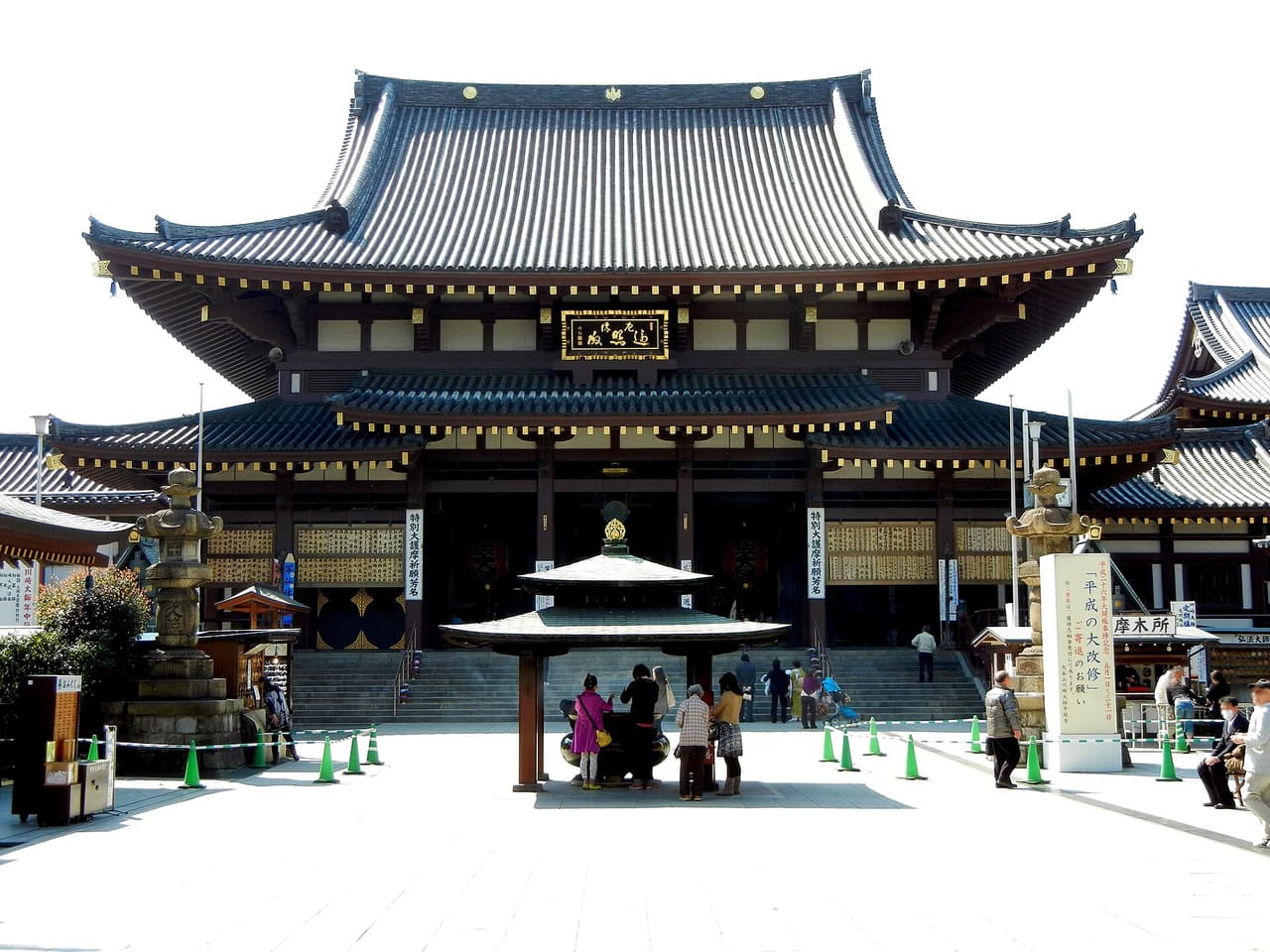
Kawasaki Daishi - formally Heikenji - at 4-48 Daishimachi, Kawasaki-ku, Kawasaki, Kanagawa, is a head temple of the Shingon Chisan school and is known throughout Japan as the temple that wards off misfortune. In the ordinary season (1 February to 30 December) the main hall opens 5:30-18:00 from April to September and 6:00-17:30 from October to March. It is 8 minutes on foot from Kawasaki-daishi Station on the Keikyu Daishi Line, and there are 700 free parking spaces. On 1-10 May 2027 the temple will hold a grand festival for the 900th anniversary of its founding. Times and dates here are as published on 18 September 2026.
At a glance
| Item | Detail |
|---|---|
| Formal name | Kongosan Kinjoin Heikenji |
| School | A head temple of the Shingon Chisan school (main head temple: Chishakuin, Kyoto) |
| Principal image | Yakuyoke Kobo Daishi - Kobo Daishi as warder-off of misfortune |
| Founded | 1128 |
| Main hall hours | Ordinary season (1 Feb-30 Dec): Apr-Sep 5:30-18:00 / Oct-Mar 6:00-17:30. On the 21st of each month 5:30-17:30; on the 20th open until 21:00 |
| Address | 4-48 Daishimachi, Kawasaki-ku, Kawasaki, Kanagawa 210-8521 (tel 044-266-3420) |
| Access | 8 minutes' walk from Kawasaki-daishi Station, Keikyu Daishi Line |
| Parking | Free: 700 cars / 40 coaches (8:00-17:00; until 20:00 on the 20th of each month) |
Telephone enquiries are taken 9:00-16:00. Hours over the New Year period are announced separately from the "ordinary season" times above.
2027: the 900th anniversary festival
This is the temple's largest announced event.
- Event: Kawasaki Daishi Heikenji 900th Anniversary Grand Festival
- Dates: 1 May (Sat) to 10 May (Mon) 2027
- Details of the individual services are to be announced
Counting from the temple's founding in 1128, the temple says 2027 falls as the 900th year. This is distinct from the once-a-decade Daikaicho described below.
The Daikaicho, once every ten years, and the red slip
Kawasaki Daishi holds a Daikaicho - a grand unveiling of the principal image - once every ten years. The observance goes back to the Edo period, and during it the image, normally hidden, is opened to view.
The most recent ran for a month, 1-31 May 2024. No date for the next has been published.
What draws people is the aka-fuda, the red slip given out only during that month. The six characters Namu Amida Butsu, in what is held to be Kobo Daishi's own hand, are cut as a printing block, and the temple's chief priest, having undergone purification, hand-prints each slip with prayer. Receiving one is said to confer immeasurable merit. It is also called the vermilion slip: red because vermilion is the colour that turns away calamity and calls in good fortune, and because the sutras describe Amida Nyorai's body as the colour of red crystal, casting great light.
During the Daikaicho a rope runs from the principal image to a memorial pagoda in front of the main hall, so that those who touch it form a connection with the image. Inside, a large gold curtain - the mitocho - hangs before the opened image, and is drawn back and closed each morning and evening in time with the chanting of the temple's soban confraternity.
How a fisherman's net gave the temple its name
Why this is a temple of warding off misfortune is answered by how it came to exist.
In the late Heian period, in the reign of Emperor Sutoku, Hirama Kanenori was driven out of his home province of Owari - modern Aichi - on a charge he was innocent of. After wandering the provinces he reached Kawasaki, where he lived modestly as a fisherman and held a deep devotion to Kobo Daishi.
In the year Kanenori turned 42 - a critical year in Japanese reckoning - a high priest appeared to him in a dream and told him: long ago in Tang China I carved an image of myself and set it adrift on the sea, and it has not yet found anyone with the karma to receive it. Cast your net for it now, make offerings to it, and extend its merit to others, and your misfortune will turn to good fortune.
Kanenori went out to sea, cast his net where the water was shining, and drew up a wooden image - the temple's principal image of Kobo Daishi. He cleaned it, enshrined it in a modest hermitage and made offerings morning and evening without fail.
In time Sonken Shonin, a priest of Mount Koya travelling the provinces, happened to call at the hermitage. Moved by the image's story and Kanenori's circumstances, the two joined forces and founded a temple in 1128, naming it Heikenji after Kanenori's surname, Hirama. In 1134 Kanenori was cleared and able to return home.
Devotion from the imperial house followed, and a visit by Tokugawa Ienari, the eleventh shogun, to pray against misfortune spread the temple's name among the townspeople of Edo and then across the country.
Kobo Daishi, or Kukai, the figure enshrined here, was born in 774 at Byobugaura in Sanuki province - now Zentsuji in Kagawa - and brought the teachings of Shingon esoteric Buddhism to Japan.
January: from the first fire rite to the first Fudo day
From the temple's published annual calendar; dates below are those given for 2026, and since weekdays shift each year you should check the official site before you go.
- Gancho Ogomaku, the New Year fire rite - 1 January from 00:00, in the main hall. As the temple bell rings out the old year, the chief priest enters at the head of the temple's monks and performs the rite before the principal image, praying for peace in the realm and for the wishes of the faithful.
- Hatsu-Yakushi - 8 January, after the early-morning fire rite at 6:30, in the Yakushi hall. The year's first day of the Medicine Buddha, with prayers for health, long life and recovery from illness, and a blessing with the Great Perfection of Wisdom Sutra for those attending.
- Coming-of-Age prayers - on Coming-of-Age Day (12 January in 2026), at a special prayer station. Those newly come of age receive a special amulet.
- Hatsu-Daishi - 20 and 21 January. The 21st is the year's first day sacred to Kobo Daishi and draws worshippers from near and far. On these two days the prayer tablets are marked with the words "Hatsu-Daishi practice" in red.
- Hatsu-Fudo - 28 January at 15:00, in the Fudo hall: the year's first day of Fudo Myoo, marked with a large fire rite from three in the afternoon.
Getting there
The train is the reliable way.
- Keikyu: change at Keikyu Kawasaki to the Daishi Line and get off at Kawasaki-daishi Station - 8 minutes on foot.
- From Saitama, Chiba and Tokyo: change to the Keikyu at JR Shinagawa - From Kamakura and Yokohama: change at JR Yokohama - From Haneda Airport: take the Keikyu Airport Express towards Yokohama
- Bus: from stop 7 at the east exit of JR Kawasaki Station, the Kawasaki Tsurumi Rinko bus on route Kawa-23 bound for Daishi. Get off at Daishi and walk 8 minutes.
- Car: about 5 minutes from the Daishi exit of the Shuto Expressway Yokohane Line, turning right at the Daishigawara crossing just past the exit; about 1 minute from the Daishi exit of the Shuto Expressway Kawasaki Line, turning right at the first signal. From the Tokyo Bay Aqua-Line, come via Ukishima onto the Kawasaki Line.
The car park is not next to the temple
This catches drivers out. Parking adjoins the traffic-safety prayer hall, not Heikenji itself (1-1-1 Daishigawara, Kawasaki-ku, tel 044-288-2441). If you are visiting the temple you walk from the car park.
- Capacity: 700 cars and 40 coaches (including minibuses)
- Parking is free
- Open 8:00-17:00 normally, and 8:00-20:00 on the 20th of each month
What people come here to do
- Prayers against misfortune, with the fire rite. Every day, before the principal image, the temple performs goma fire rites for warding off misfortune, safety in the household and success in business. Prayer tablets can also be requested by post or online.
- Traffic-safety prayers for vehicles, a practice that began here in the late 1950s and early 1960s as motoring spread in Japan. There is a dedicated prayer hall.
- Life occasions - prayers for safe childbirth, naming a child, a baby's first visit, and the Shichi-Go-San rite for children.
- Amulets and tablets, all conferred as emanations of the principal image, along with goshuin seals and commemorative items.
- Walking the precinct. Beyond the main hall and the seven principal structures are numerous smaller halls, among them the Inari hall, the only building to escape war damage. The temple also publishes a guided route around the stone monuments in the grounds.
The official site has English, Chinese and Korean pages. The temple's Tokyo branch is Yagenbori Fudoin in Chuo-ku, Tokyo, and its Kyoto branch is Ryugenji in Yamashina, Kyoto.
Other famous New Year visits
If you are planning a New Year visit, see our guides to Meiji Jingu at hatsumode, Fushimi Inari at hatsumode and Sumiyoshi Taisha at hatsumode.
Frequently asked questions
What time does Kawasaki Daishi open? In the ordinary season, 1 February to 30 December, the main hall opens 5:30-18:00 from April to September and 6:00-17:30 from October to March. On the 21st of each month it is 5:30-17:30, and on the 20th of each month it stays open until 21:00. Hours over the New Year period are announced separately, so check the official site. Telephone enquiries are taken from 9:00 to 16:00.
How do I get there, and where do I park? It is 8 minutes on foot from Kawasaki-daishi Station on the Keikyu Daishi Line; change to the Daishi Line at Keikyu Kawasaki. By bus, take the Kawasaki Tsurumi Rinko route Kawa-23 for Daishi from stop 7 at the east exit of JR Kawasaki Station and walk 8 minutes from the Daishi stop. From Haneda Airport, the Keikyu Airport Express towards Yokohama is convenient. Parking is not beside the temple but adjoins the traffic-safety prayer hall at 1-1-1 Daishigawara, with room for 700 cars and 40 coaches. It is free, open 8:00-17:00, and until 20:00 on the 20th of each month.
What is the aka-fuda, and when can I receive one? The aka-fuda is a red paper amulet given out only during the Daikaicho, the grand unveiling held once every ten years. The six characters Namu Amida Butsu, held to be in Kobo Daishi's own hand, are cut as a block, and the chief priest, after purification, hand-prints each slip with prayer; receiving one is said to confer immeasurable merit. The most recent Daikaicho ran from 1 to 31 May 2024. No date for the next has been published.
Who founded Kawasaki Daishi, and when? It was founded in 1128 by Sonken Shonin, a priest of Mount Koya, together with Hirama Kanenori. Kanenori, exiled from Owari on a false charge, had in his 42nd year followed a dream and drawn an image of Kobo Daishi from the sea in his net, then enshrined it. The temple takes its formal name, Heikenji, from his surname, Hirama. In 1134 he was cleared of the charge.
When is the 900th anniversary festival in 2027? From Saturday 1 May to Monday 10 May 2027. The temple announces that this year falls as the 900th since its founding in 1128. Details of the services are to be announced.
When and how this was checked
This page was compiled on 18 September 2026 from the official Kawasaki Daishi Heikenji site - its history page, access page, January events and Daikaicho page. All details are as of 18 September 2026. Opening hours, event dates and parking arrangements can change; check the official site before you visit. Note that the temple does not publish visitor numbers for the New Year period, so no such figure appears here.
Update log: published 2026-09-18, covering the 900th anniversary festival announcement (1-10 May 2027), ordinary-season main hall hours, parking capacity and times, and the January calendar.
常见问题
- What time does Kawasaki Daishi open?
- In the ordinary season, 1 February to 30 December, the main hall opens 5:30-18:00 from April to September and 6:00-17:30 from October to March. On the 21st of each month it is 5:30-17:30, and on the 20th of each month it stays open until 21:00. Hours over the New Year period are announced separately, so check the official site. Telephone enquiries are taken from 9:00 to 16:00.
- How do I get there, and where do I park?
- It is 8 minutes on foot from Kawasaki-daishi Station on the Keikyu Daishi Line; change to the Daishi Line at Keikyu Kawasaki. By bus, take the Kawasaki Tsurumi Rinko route Kawa-23 for Daishi from stop 7 at the east exit of JR Kawasaki Station and walk 8 minutes from the Daishi stop. From Haneda Airport, the Keikyu Airport Express towards Yokohama is convenient. Parking is not beside the temple but adjoins the traffic-safety prayer hall at 1-1-1 Daishigawara, with room for 700 cars and 40 coaches. It is free, open 8:00-17:00, and until 20:00 on the 20th of each month.
- What is the aka-fuda, and when can I receive one?
- The aka-fuda is a red paper amulet given out only during the Daikaicho, the grand unveiling held once every ten years. The six characters Namu Amida Butsu, held to be in Kobo Daishi's own hand, are cut as a block, and the chief priest, after purification, hand-prints each slip with prayer; receiving one is said to confer immeasurable merit. The most recent Daikaicho ran from 1 to 31 May 2024. No date for the next has been published.
- Who founded Kawasaki Daishi, and when?
- It was founded in 1128 by Sonken Shonin, a priest of Mount Koya, together with Hirama Kanenori. Kanenori, exiled from Owari on a false charge, had in his 42nd year followed a dream and drawn an image of Kobo Daishi from the sea in his net, then enshrined it. The temple takes its formal name, Heikenji, from his surname, Hirama. In 1134 he was cleared of the charge.
- When is the 900th anniversary festival in 2027?
- From Saturday 1 May to Monday 10 May 2027. The temple announces that this year falls as the 900th since its founding in 1128. Details of the services are to be announced.