Why Do Sumo Wrestlers Throw Salt? Sumo's Rituals Explained
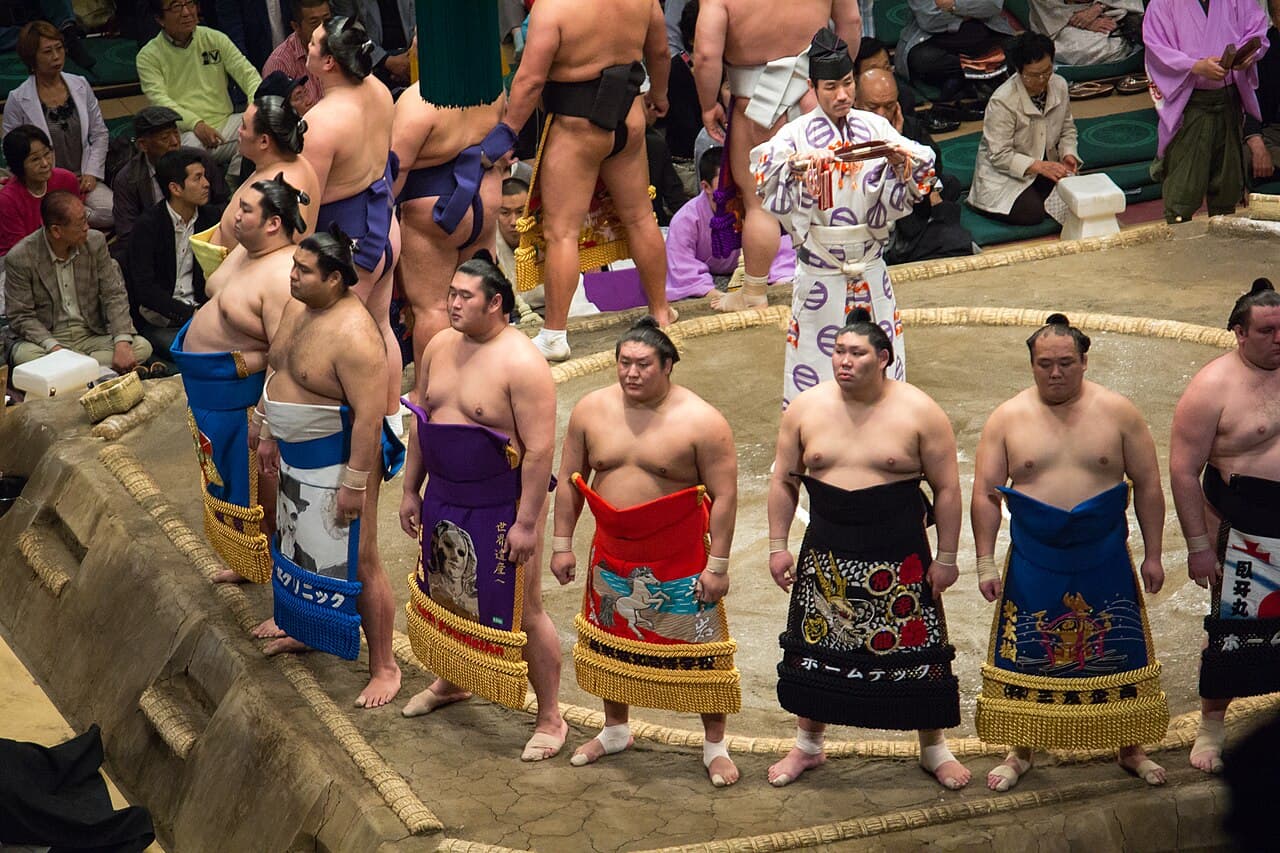
Sumo wrestlers throw salt to purify the dohyo (ring) before a bout — a Shinto act meant to drive out impurity and evil from the sacred clay circle. It's one of several ritual gestures that turn a few seconds of combat into a small piece of living Shinto liturgy. If you're planning a day at the tournament, our sumo for first-timers guide covers the timeline and etiquette; this page is about what the rituals themselves mean.
Salt-throwing (shiomaki): purifying sacred ground
Salt has been used for purification in Japan since the mythology recorded in the 8th-century Kojiki and Nihon Shoki, in which the god Izanagi cleanses himself in the sea after visiting the land of the dead. Sea salt carries that same purifying association, and only sekitori — wrestlers ranked juryo or above, the top two divisions — have the right to throw it. Across a single day of a tournament at Tokyo's Ryogoku Kokugikan, wrestlers throw roughly 45 kg of salt in total; over a full 15-day tournament that adds up to several hundred kilograms. Higher-ranked wrestlers, and those building excitement before a big bout, often throw a more theatrical handful.
Shiko: the foot-stomping that wakes the ring
Before salt is thrown, wrestlers perform shiko — raising one leg high, hip rotated outward, then driving it down onto the clay with full force. The gesture is usually explained as stamping out evil spirits from the ground and, in an older agricultural reading, as a prayer for a good harvest. It also happens to be one of the most demanding warm-ups in any combat sport, requiring the extreme hip flexibility sumo training builds over years.
Chirichozu: showing you carry no weapon
Before the referee gives the signal to begin, wrestlers crouch and clap their hands, then extend their arms out and turn the palms up — a gesture called chirichozu. It has two accepted meanings that aren't mutually exclusive: it announces to the kami (and the opponent) that the wrestler carries no concealed weapon, and the clap itself is read as a way of getting the deity's attention before the contest, echoing the two-clap of an ordinary shrine visit.
Why the rituals persist
Sumo's origins are themselves tied to Shinto: the dohyo is treated as sacred ground, roofed like a shrine, and the pre-bout sequence is part of that framing rather than decoration. Modern broadcasts trim the pauses for time, but at the venue the ritual is the slow build the crowd is there for — arrive by early-to-mid-afternoon (see our first-timer's guide) and you'll see it unhurried, bout after bout.
FAQ
Why do sumo wrestlers throw salt? To purify the dohyo (ring) before a bout — a Shinto purification act using sea salt, which has been linked to ritual cleansing in Japan since the Kojiki and Nihon Shoki. Only sekitori (juryo rank and above) may throw it.
How much salt is thrown at a sumo tournament? Roughly 45 kg is thrown across a single day at Ryogoku Kokugikan; over a full 15-day tournament that totals several hundred kilograms.
Why do sumo wrestlers stomp their feet? The stomp is called shiko — it's usually explained as stamping evil spirits out of the ground, and in an older reading as a prayer for a good harvest. It also doubles as an extreme hip-flexibility warm-up.
What is the hand-clapping sumo wrestlers do before a match? It's called chirichozu: wrestlers clap, then spread their arms with palms up to show they carry no weapon — a gesture also read as calling the kami's attention before the bout.
Read next
- Going to a tournament → Sumo for first-timers: what to expect, timeline & etiquette
- Getting tickets → How to buy sumo tickets in Japan
- Full 2027 schedule → Grand Sumo 2027: schedule, venues & tickets
Frequently asked questions
- Why do sumo wrestlers throw salt?
- To purify the dohyo (ring) before a bout — a Shinto purification act using sea salt, which has been linked to ritual cleansing in Japan since the Kojiki and Nihon Shoki. Only sekitori (juryo rank and above) may throw it.
- How much salt is thrown at a sumo tournament?
- Roughly 45 kg is thrown across a single day at Ryogoku Kokugikan; over a full 15-day tournament that totals several hundred kilograms.
- Why do sumo wrestlers stomp their feet?
- The stomp is called shiko — it's usually explained as stamping evil spirits out of the ground, and in an older reading as a prayer for a good harvest. It also doubles as an extreme hip-flexibility warm-up.
- What is the hand-clapping sumo wrestlers do before a match?
- It's called chirichozu: wrestlers clap, then spread their arms with palms up to show they carry no weapon — a gesture also read as calling the kami's attention before the bout.