Highlights
- Departs Kenreimon Gate, Kyoto Imperial Palace at 12:00 (head reaches Heian Jingu around 14:30)
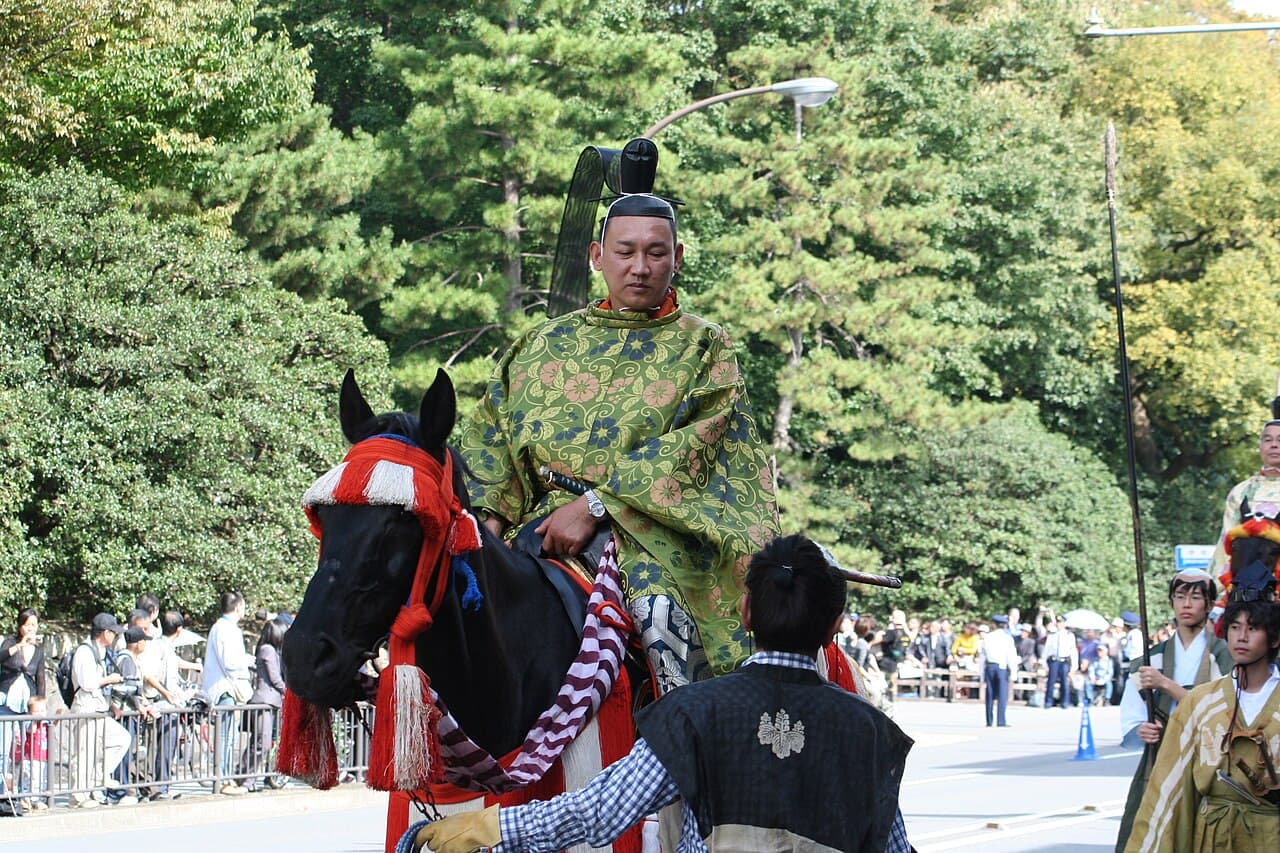
- About 2,000 marchers over roughly 2 km, travelling back through 8 eras from the Meiji Restoration to the Heian capital
- Led by the fife-and-drum Ishin Kinno-tai, with figures such as Katsura Kogoro, Oda Nobunaga and Murasaki Shikibu
- At its heart: two sacred palanquins carrying the spirits of Emperors Kanmu and Komei, which the whole procession escorts
Background & story
Started in 1895 to mark the 1,100th anniversary of Kyoto becoming the capital and the founding of Heian Jingu Shrine.
Jidai Matsuri, the "Festival of the Ages", is the grand festival of Heian Jingu Shrine and one of Kyoto's three great festivals alongside Aoi Matsuri and Gion Matsuri. Its centrepiece is a costume procession of about 2,000 Kyoto citizens dressed in the styles of each era from the Meiji Restoration back to the founding of the Heian capital. In 2026 it leaves Kenreimon Gate of the Kyoto Imperial Palace on Thursday, October 22 at 12:00, and its head is due at Heian Jingu at about 14:30. This page covers when, where and how to watch it.
October 22, 2026: the day at a glance
| Time | What happens |
|---|---|
| 9:00 | The sacred palanquins leave Heian Jingu for the Imperial Palace |
| 10:30 | Rite at Kenreimon Gate (Imperial Palace) |
| 12:00 | The procession departs Kenreimon Gate |
| about 14:30 | The head of the procession reaches Heian Jingu |
The full procession takes about two hours to pass any point. If it rains (or storms), it moves to Friday, October 23; if the 23rd is also wet, it is cancelled. The decision is made early that morning.
Route and scheduled times (head of the procession)
| Point | Scheduled |
|---|---|
| Kenreimon Gate, Imperial Palace (start) | 12:00 |
| Sakaimachi Gomon | 12:15 |
| Karasuma-Marutamachi | 12:30 |
| Karasuma-Oike | 12:50 |
| Kawaramachi-Oike | 13:20 |
| Kawaramachi-Sanjo | 13:30 |
| Sanjo Ohashi Bridge | 13:40 |
| Sanjo-Jingumichi | 14:10 |
| Heian Jingu (finish) | 14:30 |
The procession heads west along Marutamachi-dori, then down Karasuma-dori to Oike-dori, along Kawaramachi-dori and Sanjo-dori, and up Jingu-michi into Heian Jingu. Times are those published by the Kyoto City Tourism Association for the head of the procession; the tail passes roughly two hours later.
Paid seats (2026 prices)
Roadside viewing is free everywhere. For a seat, the Kyoto City Tourism Association sells reserved grandstand places at three spots (tax included, all reserved):
| Location (head arrives) | Seat | Front row | 2nd row onward |
|---|---|---|---|
| Kyoto Gyoen (about 12:00) | General | ¥7,500 | ¥5,000 |
| Oike-dori (about 13:20) | General | ¥7,500 | ¥5,000 |
| Jingu-michi (about 14:20) | General | ¥7,500 | ¥5,000 |
| Jingu-michi | Oten-mon Gate special seat (Japanese and English commentary) | ¥15,500 | ¥13,500 |
Kyoto Gyoen also has manabi seats with Japanese-only commentary (¥10,500 / ¥8,500). General sales opened on September 8, 2026 at 10:00 JST through Ticket Pia online and at Seven-Eleven stores (P code 661-579). According to the official English seat page, the Kyoto Gyoen general seats include live commentary in English or Chinese, which you hear on your own internet-connected smartphone or tablet with headphones; at the Oten-mon Gate special seats you are given an earphone device at reception. Check availability and conditions on the official seat guide (Kyoto Travel).
If it rains
- Whether the procession goes ahead or is postponed is decided early that morning.
- Seat tickets are valid on the rain date (Oct 23) as they are; refunds apply only if the procession is held on neither day.
- Umbrellas, parasols and tripods are not allowed in the seating areas; bring a raincoat.
Getting there
- Start (Kenreimon Gate, Kyoto Gyoen): Marutamachi Station, Karasuma subway line
- Finish (Heian Jingu Shrine): about 10 minutes on foot from Exit 1 of Higashiyama Station, Tozai subway line
- Heian Jingu has no parking; take public transport on the day.
What you will see
The procession is led by the fife-and-drum Ishin Kinno-tai and moves back through the Edo, Azuchi-Momoyama, Muromachi, Yoshino, Kamakura, Fujiwara and Enryaku periods: late-Edo loyalists such as Katsura Kogoro, Oda Nobunaga's march into Kyoto, Heian court women such as Murasaki Shikibu and Sei Shonagon. The whole procession escorts the two sacred palanquins carrying the spirits of Emperor Kanmu and Emperor Komei, the deities of Heian Jingu; in the official order, these come after the Enryaku-period groups, towards the rear of the procession. The costumes and ritual objects are made to match historical research.
Related
- A fire festival in Kurama, north of central Kyoto → Kurama Fire Festival
- Another of Kyoto's three great festivals → Gion Matsuri 2026 guide
Checked 2026-10-13. Dates, passing times and seats can change; see Heian Jingu: Jidai Matsuri (Japanese) and the official seat guide for the latest.
Good to know for visitors
- Getting there
- Start: Kenreimon Gate, Kyoto Imperial Palace (Marutamachi Station, Karasuma subway line). Finish: Heian Jingu Shrine (about 10 min walk from Exit 1 of Higashiyama Station, Tozai subway line). No parking at Heian Jingu; use public transport. Open directions in Google Maps ↗
- Booking & entry
- Free to attend — details on the official page (button above).
- Language
- Mostly in Japanese — a translation app on your phone helps.
- Good for
- culture seekers, families, art lovers
Good to know
Watching from the roadside is free. To sit and see the whole two-hour procession, book a paid seat at Kyoto Gyoen, Oike-dori or Jingu-michi (from ¥5,000). Umbrellas, parasols and tripods are not allowed in the seating areas, so bring a raincoat. Heian Jingu has special opening hours on the day; check the shrine's notice.
Frequently asked questions
- When is Jidai Matsuri 2026 and what time does it start?
- Thursday, October 22, 2026. The procession leaves Kenreimon Gate of the Kyoto Imperial Palace at 12:00, and its head is scheduled to reach Heian Jingu Shrine at about 14:30. The whole procession takes about two hours to pass. Earlier that morning the two sacred palanquins leave Heian Jingu at 9:00, and a rite is held at Kenreimon Gate at 10:30. (Checked 2026-10-13.)
- What is the parade route and when does it pass each point?
- Kenreimon Gate, Imperial Palace (12:00) → Sakaimachi Gomon (12:15) → Karasuma-Marutamachi (12:30) → Karasuma-Oike (12:50) → Kawaramachi-Oike (13:20) → Kawaramachi-Sanjo (13:30) → Sanjo Ohashi Bridge (13:40) → Sanjo-Jingumichi (14:10) → Heian Jingu (14:30). These are the scheduled times for the head of the procession published by the Kyoto City Tourism Association. (Checked 2026-10-13.)
- What happens if it rains?
- If October 22 is rainy or stormy, the procession moves to Friday, October 23; if the 23rd is also rainy or stormy, it is cancelled. The call is made early on the morning of the day. Paid-seat tickets are valid on the 23rd as they are, and are refunded only if the procession does not take place on either day. Umbrellas are not allowed in the seating areas, so bring a raincoat. (Checked 2026-10-13.)
- How much are the paid seats and how do I buy them?
- For 2026, reserved seats are set up at Kyoto Gyoen, Oike-dori and Jingu-michi. General seats cost ¥7,500 (front row) or ¥5,000 (second row onward), tax included. The Oten-mon Gate special seats on Jingu-michi, with Japanese and English commentary, cost ¥15,500 (front row) or ¥13,500. General sales opened on September 8, 2026 at 10:00 JST through Ticket Pia online and at Seven-Eleven stores (P code 661-579). Check remaining availability on the official seat page (checked 2026-10-13).
- Can I watch Jidai Matsuri for free?
- Yes. You can watch the procession for free from anywhere along the roadside; only the grandstand seats at Kyoto Gyoen, Oike-dori and Jingu-michi are paid. Seats are worth it if you want to sit and see the full two-hour procession.
- How do I get there?
- The start, Kenreimon Gate in Kyoto Gyoen, is closest to Marutamachi Station on the Karasuma subway line. The finish, Heian Jingu Shrine, is about a 10-minute walk from Exit 1 of Higashiyama Station on the Tozai subway line. According to Heian Jingu, the shrine has no parking, so use public transport.
Getting there
Kyoto Imperial Palace to Heian Jingu Shrine — Kyoto Gyoen, Kamigyo-ku, Kyoto