Hachinohe Enburi 2027
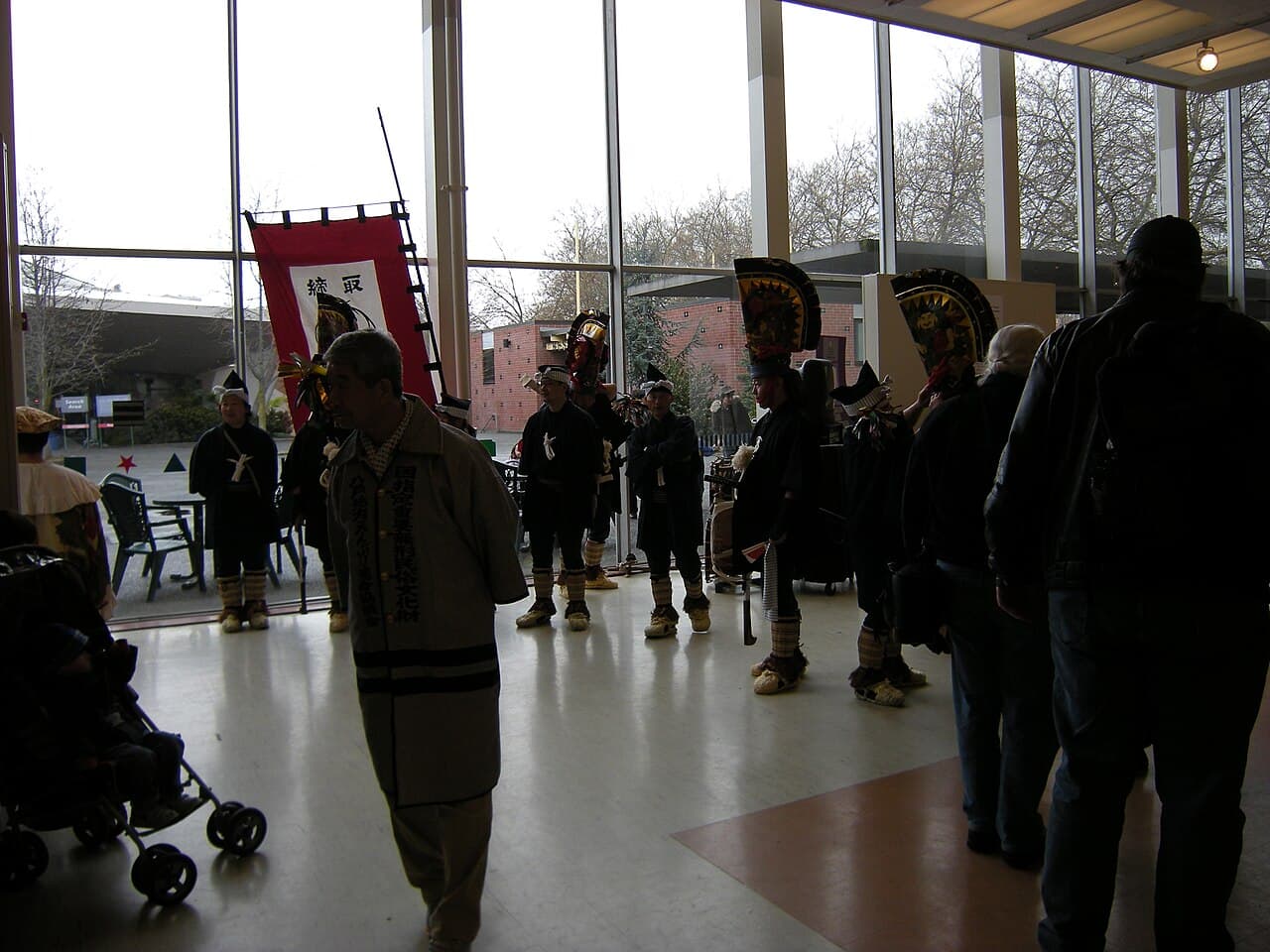
Every February 17-20, dozens of Enburi troupes dance through Hachinohe in tall black eboshi hats to summon an early spring and good harvest - a roughly 800-year-old rite tracing to the Kamakura era, now a national Important Intangible Folk Cultural Property.
Quand · Où
- Quand
- 2027/02/17 07:00 – 2027/02/20
- Où
- Hachinohe City Hall Plaza (Shiyakusho-mae Shimin Hiroba), for the nightly Kagaribi Enburi torchlight performances(1-1 Uchimaru 1-chome, Hachinohe, Aomori 031-8686)
- Ville
- Partout au Japon
- Y aller
- Take the Tohoku Shinkansen to Hachinohe Station, then transfer to the local JR Hachinohe Line for the roughly 6-8 minute ride to Hon-Hachinohe Station; City Hall Plaza is about an 8-minute walk from the station's south exit, or get off right in front at the 'Shicho-mae' city-bus stop. The festival's dawn dedication dance is held at a separate site, Chojagashira Shinra Shrine, a short taxi or bus ride away.
- Prix
- Gratuit
- Organisateur
- Hachinohe Regional Enburi Preservation and Promotion Association (八戸地方えんぶり保存振興会), c/o VISIT Hachinohe
Bon à savoir avant d’y aller
- Y aller
- Take the Tohoku Shinkansen to Hachinohe Station, then transfer to the local JR Hachinohe Line for the roughly 6-8 minute ride to Hon-Hachinohe Station; City Hall Plaza is about an 8-minute walk from the station's south exit, or get off right in front at the 'Shicho-mae' city-bus stop. The festival's dawn dedication dance is held at a separate site, Chojagashira Shinra Shrine, a short taxi or bus ride away. Ouvrir l’itinéraire dans Google Maps ↗
- Réservation & entrée
- Gratuit : détails sur la page officielle (bouton ci-dessus).
- Langue
- Principalement en japonais : une appli de traduction sur le téléphone aide.
- Idéal pour
- amateurs de culture
À ne pas manquer
- Each troupe's tayu (lead dancers) wear a tall black eboshi shaped like a horse's head and perform the 'suri,' a dance that acts out the rice-farming year - breaking the soil, planting, and harvest - named for the eburi, the wooden tool once used to level paddy fields
- After dark, the 'Kagaribi Enburi' torchlight shows light up Hachinohe City Hall Plaza for four straight nights (18:00, 19:00 and 20:00), the horse-head headdresses and gold-threaded robes glowing against the bonfires
- Legend traces the dance some 800 years to the early Kamakura period, when a farmer named Tokuro is said to have calmed his fellow retainers' drunken New Year's sword-brawl by dancing with farm tools instead; it's now a national Important Intangible Folk Cultural Property (designated 1979)
Origine & histoire
Legend traces Enburi back roughly 800 years to the early Kamakura period, when retainers of the Nanbu clan came north from Kai Province. According to the story, a farmer named Tokuro calmed his fellow retainers' drunken, sword-waving New Year's brawl by singing rice-planting songs and dancing with farm tools instead - the dance that became Enburi. The word itself comes from eburi, the tool used to level paddy soil before planting. Banned as an 'unsavory custom' in the Meiji era, it was revived as the 'Honen-sai' bountiful-harvest festival at Chojagashira Shinra Shrine by local statesman Osawa Tamon, and was designated a national Important Intangible Folk Cultural Property in 1979.
Bon à savoir
Bundle up - the plaza performances happen outdoors in the depths of Aomori winter, often below freezing after dark. Arrive early for a spot near the bonfires at the 18:00 Kagaribi Enburi show, and warm up with food-stall amazake or oden between performances.