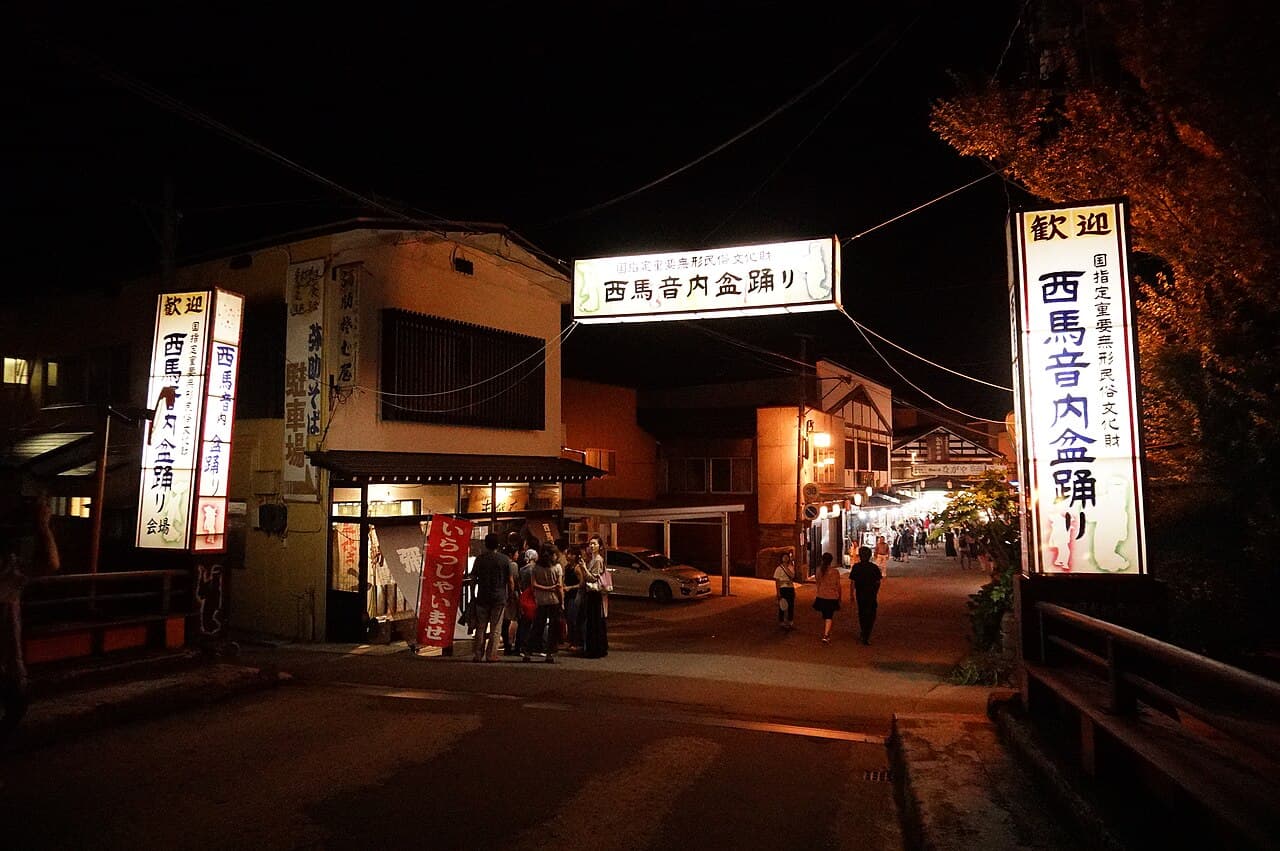
Highlights
- Two alternating dance styles all night: the slow, elegant Ondo and the faster, harder Ganke, danced to shamisen, drums and a distinctive nasal chant
- Adult dancers (who join after 21:00) hide their identity completely under a black hikosa-zukin cloth hood or a deep amigasa sedge hat pulled low over the face
- One of Japan's 'three great Bon Odori' alongside Gujo Odori (Gifu) and Awa Odori (Tokushima) — at roughly 700 years old, it's designated a national Important Intangible Folk Cultural Property
Background & story
Local tradition traces the dance back roughly 700 years to a harvest-prayer dance performed by a Buddhist monk, later merged with a mourning dance for the retainers of a defeated local clan — the fusion of harvest prayer and quiet grief is said to explain its uniquely melancholic, masked style. It was designated a national Important Intangible Folk Cultural Property in 1981.
Good to know for visitors
- Getting there
- About 30 minutes by bus from JR Yuzawa Station (Ou Main Line) on the Ugo Kotsu Nishimonai Line to the Nishimonai area; a seasonal shuttle bus has also run from Yuzawa Station in past festival years, though the 2026 shuttle timetable was still marked "in preparation" as of early July — check the official site closer to the dates. Open directions in Google Maps ↗
- Booking & entry
- Free to attend — details on the official page (button above).
- Language
- Mostly in Japanese — a translation app on your phone helps.
- Good for
- culture seekers, families
Good to know
Arrive well before dark and stake out a free standing spot along Honmachi-dori if you don't have reserved seating — the atmosphere is best after 21:00 once the masked adult dancers take over from the earlier children's rounds.
Getting there
Nishimonai Honmachi-dori (Nishimonai Main Street), Ugo — Nishimonai-aza-Nakano 177, Ugo, Ogachi District, Akita 012-1131