Highlights
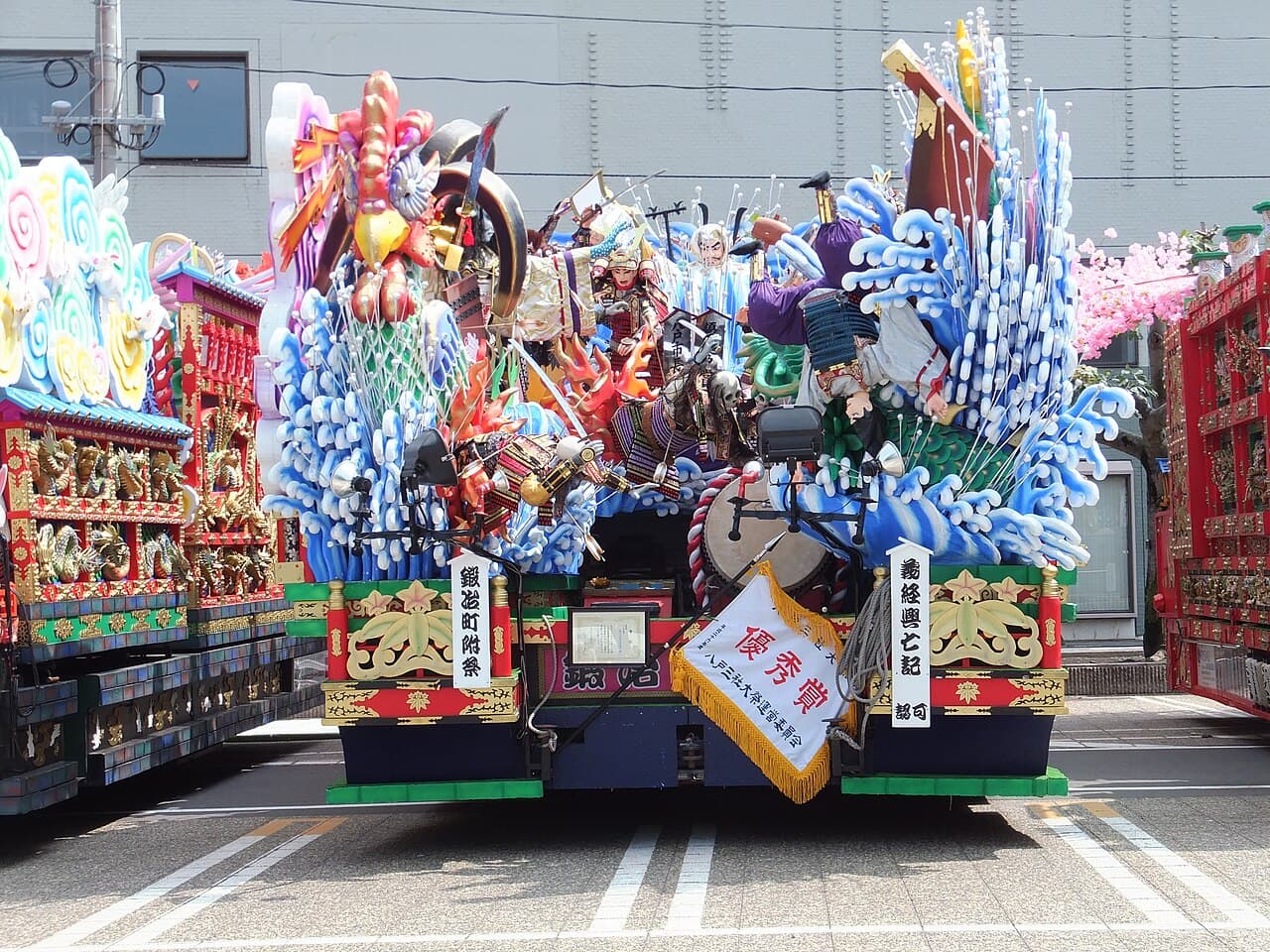
- 27 elaborately carved and gold-leafed floats (dashi), each up to 8m wide, 11m deep and 10m tall, are largely rebuilt every year by their own neighborhood associations and paraded alongside the mikoshi of three shrines
- Named for the joint festival of Ogami Shrine, Chojagashira Shinra Shrine and Shinmei-gu, whose portable shrines process through the city in a different order on the outbound Otori (Aug 1) and return Okaeri (Aug 3) days
- A UNESCO Intangible Cultural Heritage since 2016 (part of Japan's 33 'Yama, Hoko, Yatai' float festivals) and a national Important Intangible Folk Cultural Property since 2004, tracing back to a 1721 harvest-thanksgiving procession
Background & story
The festival began in 1721, when Horyo-sha (法霊社, now Ogami Shrine) held a mikoshi procession to Chojagashira in thanks for a good harvest; Shinmei-gu and Chojagashira Shinra Shrine later joined to form the three-shrine festival, and neighborhood floats were added over the following centuries. It was designated a national Important Intangible Folk Cultural Property in 2004 and inscribed on UNESCO's Intangible Cultural Heritage list in 2016.
Good to know for visitors
- Getting there
- Take the Tohoku Shinkansen to Hachinohe Station, then the local JR Hachinohe Line (about 6-8 minutes) to Hon-Hachinohe Station; the Omote-dori viewing streets in the city centre are a 5-10 minute walk from the station, and paid grandstand seating is set up directly along the route for the three main parade days. Open directions in Google Maps ↗
- Booking & entry
- Free to attend — details on the official page (button above).
- Language
- Mostly in Japanese — a translation app on your phone helps.
- Good for
- culture seekers
Good to know
The evening of Aug 2 (Chunichi) is when floats parade lit up after dark - arguably the most photogenic night to visit. Aug 1 (Otori) and Aug 3 (Okaeri) are the two big procession days; arrive early to claim free standing space, since the popular stretches of Omote-dori fill up well before the floats appear.
Getting there
Chuo-dori / Omote-dori, central Hachinohe (Sannichi-machi, Jusannichi-machi and Nijusannichi-machi) — Jusannichi-machi, Hachinohe, Aomori 031-0042 (central viewing street)